Master's Degree Programme, 5 years

Biotechnology

- About the degree programme

NTNU offers a Master's degree in Biotechnology through a five-year long degree programme with admission directly from upper comprehensive school.

In addition, NTNU has a two-year long degree programme in Biotechnology within studies of scientific subjects that build on a relevant Bachelor's degree from university colleges or universities, and a five-year long degree programme (Chemical Engineering and Biotechnology) within the programme for advanced engineering with the course Biotechnology.

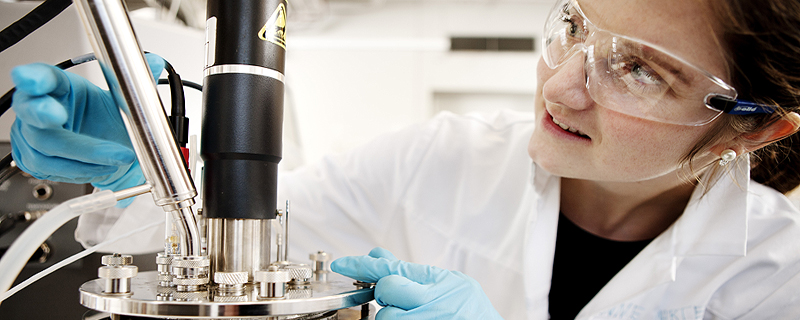
Bilde av en student som arbeider på et laboratorium, Foto: © iStockphoto.com/Jacob Wackerhausen

The term biotechnology is used for both general molecular biological research and industrial processes for the production of useful biological products.


In recent years, biotechnology has experienced a dramatic development, particularly because we now have enormous amounts of information about the structure of genetic material with humans and other mammals, plants, fish, invertebrates and microorganisms. Today, we have computer tools that store and analyze huge amounts of biological data and are invaluable tools for biotechnological research. This development has been crucial to the progresses within medical diagnostics, the production of new medicines, and plant breeding, as well as a better understanding of biological systems.

The development of more advanced methods of analysis enables us to evaluate biological reactions and systems much more accurately than we could just a few years ago. This basic knowledge is important when developing biotechnology for the future. Biotechnology is a field where technology and basic research meet. It is a research area composed of several independent disciplines, and good results require cooperation.

Biotechnology also borders on parts of nanotechnology, which is a priority area at NTNU. Bionanotechnology has already been established as a separate research field internationally. The biotechnology programme will undoubtedly be affected by this fact, and it will be reflected in new and fascinating master's theses. Examples could be biologically active nanoparticles, artificial viruses, etc.

The scientific programme in Biotechnology is from the beginning aimed at scientific research where cell and molecular biology, biochemistry and microbiology are central disciplines. The structure of this programme differs slightly from the advanced engineering programme Chemistry and Biotechnology which includes more technological and process topics. This programme aims to provide a thorough understanding of the biological processes in bacteria, plants and animals. An interest in scientific subjects in general and knowledge within chemistry and biology in particular are an advantage.

The specialization within the degree programme Biotechnology takes place during the final two years, and will in practice be closely connected to the final two years of the remaining programmes in Biotechnology. For instance, we have a long tradition of students from different degree programmes working together within the same research area or research groups. The master's theses can be associated with the department's extensive cooperation with industry, or with EU projects, or advanced basic research projects.

You may choose to write your master's thesis at three departments:

Department of Biology

  • Molecular Biology
  • Computational Biology

Department of Chemistry

  • Biocatalysis

Department of Biotechnology

  • Biopolymer Chemistry
  • Marine Biochemistry
  • Microbiology and Molecular Genetics
  • Environmental Biotechnology
  • Food Chemistry

Examples of research activities/master's theses:

  • Biopolymer Engineering: Interdisciplinary approach to studies in genetics, biosynthesis, primary structures and modifications, conformation and interactions and physical properties as the basis for understanding biopolymers' biological and technological properties. The research group NOBIPOL offers a number of interdisciplinary projects for Master's degree students.
  • Use of marine biopolymers (including alginates, chitosan, marine collagen) in new biomedical products (immobilization and encapsulating technologies, non-viral transfection agents, immune-stimulating biopolymers), in cosmetics and food.
  • Applied computer-scientific methods to understand biological functions and the connection between genetic material and protein production and structures in bacteria, plants or human cells.
  • Use of biological catalysts (biocatalysis) in the production of chemical products in environmentally-friendly surroundings (so-called green chemistry).
  • Gene modification and genetic studies of microorganisms, plant and animal cells by means of modern molecular methods.
  • Production of antibiotics, amino acids and unsaturated fatty acids by growing microorganisms in bioreactors.
  • Gene modification of microorganisms for biotechnological production of useful substances.
  • Isolation of commercially interesting marine microorganisms.
  • Use of bacteria for increased oil production in the North Sea and in biological treatment plants.
  • Improved exploitation of marine raw materials and by-products.
  • Mass production of antibodies for medicines and research by using cloned gene sequences.

NTNU has very extensive research activities within nearly all areas of biotechnology. As a Master's student, you will have the opportunity to work within god and interdisciplinary environments at international level, in cooperation with leading researchers and their research fellows

Illustrasjonsbilde/FOTO, Design: Agendum See Design as

Facts:

Master’s Degree:

1st year, autumn semester:
Mathematics
Examen Philosoficum (compulsory introductory course in Philosophy)
General Chemistry

1st year, spring semester:
Cell and Molecular Biology
Organic Chemistry

2nd year, autumn semester:
Biochemistry, foundational course (FC)
Information Technology, FC
Courses depending on field of study

2nd year, spring semester:
Perspective Course
Mathematics
Biochemistry, advanced course (AC)
Microbiology

3rd year, autumn semester:
Molecular Genetics
Elective course Molecular Biology
Course depending on field of study

3rd year, spring semester:
Elective courses depending on field of study

4th year, autumn:
Selected courses at Master’s level Master’s thesis

4th year, spring:
Interdisciplinary course
Master’s thesis

5th year, autumn:
Selected courses at Master’s level
Master’s thesis

5th year, spring:
Individually selected syllabus
Selected courses at Master’s level
Master’s thesis