
The Lars Onsager Lecture and Professorship
The Lars Onsager Lecture and Professorship
Call for nominations for the 2027 Lars Onsager Lecturer and Lars Onsager Professor
Permanent faculty in the Departments of Physics, Chemistry and Biomedical Science, Chemical Engineering, Materials Science and Engineering, Biotechnology and Food Science, as well as Mathematical Sciences, are invited to propose candidates for the 2027 Lars Onsager Lecturer and Lars Onsager Professorship at NTNU. Further information, including a list of previous Onsager Lecturers and Professors, is available on the Onsager website.
Candidates for the Lars Onsager Professorship should be outstanding scientists willing to spend 3-6 months at NTNU. The Onsager Professor will receive a salary (trinn 80 i Statens regulativ) while at NTNU. In addition, NTNU will reimburse necessary travel expenses and insurance. There is a 10% overhead for the host department and 10% to cover running expenses.
Please submit your proposals (in English, as a PDF only) by email to the chair of the Onsager committee, Prof. Arne Brataas (Arne.Brataas@ntnu.no). The deadline is April 10, 2026.
The Lars Onsager Lecture 2026

Photo: P. Badge
Avi Wigderson, Herbert H. Maass Professor at the School of Mathematics, Institute for Advanced Study, Princeton.
Wigderson received the 2021 Abel Prize in mathematics and the 2024 Turing Award in computer science
The Lars Onsager Lecture will be presented on
Thursday, 22 October 2026 at 10:15-11:30 in Lecture Hall EL5 at Gløshaugen
The title is
Randomness
Abstract:
Is the universe inherently deterministic or probabilistic? Perhaps more importantly -
Which of these applications survive if the universe had no randomness in it at all?
A computational theory of randomness, developed in the past four decades, reveals
The day before, Wednesday, 21 October 2026 at 14:15-15:30 in Lecture Hall S7 at
Avi Wigderson will give the following colloquium:
Imitation games
Abstract
One of Alan Turing's most influential papers is his 1950 Computing machinery and
Instead, this lecture will exposit, through examples from a surprisingly diverse array
No special background will be assumed.
For further details, please contact Prof. Helge Holden
Lars Onsager Professorship
The Lars Onsager Professor 2026

Dr. Jorge Casares Velázquez, Profesor de Investigación, Instituto de Astrofísica de Canarias, Spain.
For further details, please contact Prof. Manuel Linares or Prof. Helge Holden.
Previous Lars Onsager Professors
Lars Onsager (1903–1976)
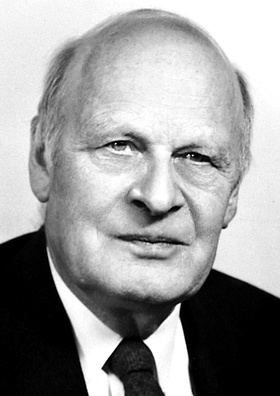
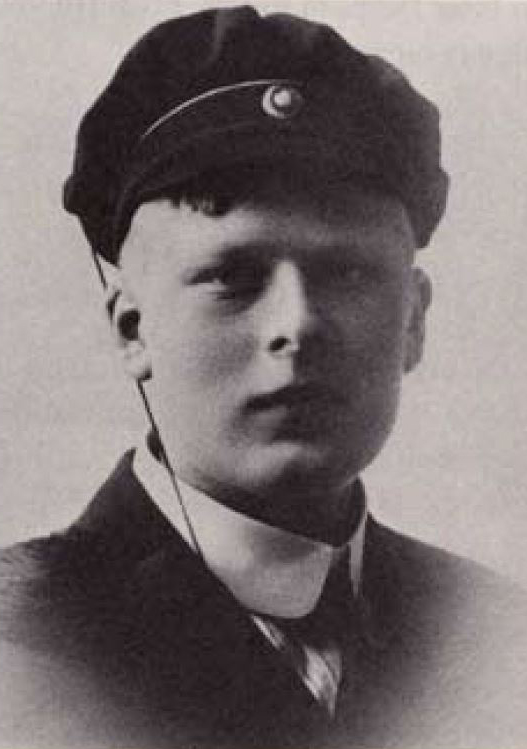 Lars Onsager was a Norwegian-American chemist and physicist. Onsager was born in Oslo. He held a Ch.E. degree (1925) from NTH (Norwegian Institute of Technology, later NTNU Norwegian University of Science and Technology).
Onsager migrated to the USA in 1928, and became an American citizen in 1945. Onsager was a J. Willard Gibbs Professor at Yale University.
Onsager was awarded the The Nobel Prize in Chemistry 1968 for his work done in 1931 on irreversible thermodynamics.
The Onsager Medal
The Onsager Lecturer and the Onsager Professor receive the Onsager Medal.
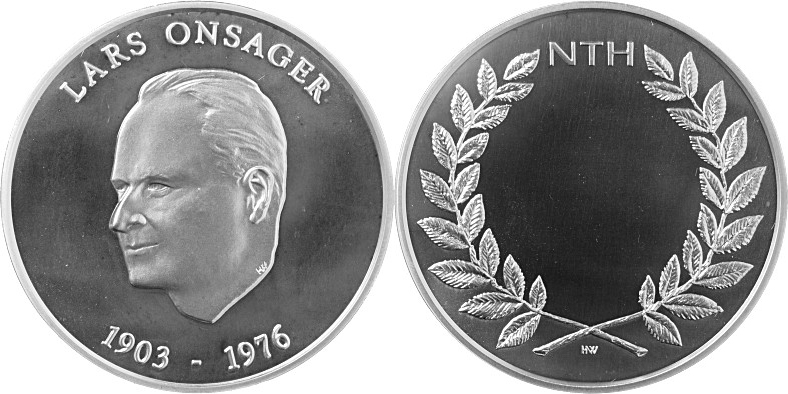
Artist: Harald Wårvik. Minted by The Mint of Norway (Det Norske Myntverket), Kongsberg, Norway.
The Lars Onsager Archive
Thanks to the generosity of Lars Onsager's sons and daughter, the Norwegian University of Science and Technology has established a Lars Onsager Archive.
The Lars Onsager Archive is located at the Dora Library (a repository library for the NTNU University Library) and the Gunnerus Library (the Special Collections of the NTNU University Library) in Trondheim, Norway.
A substantial part of the archive has now been made freely available in digital form:
Biographical Material
A general reference to the scientific works of Lars Onsager is:
- The Collected Works of Lars Onsager (with commentary)
P.C. Hemmer, H. Holden, S.K. Ratkje, editors
World Scientific, Singapore 1996 - A biography on Lars Onsager (pdf)
by P.C. Hemmer and E. Hiis Hauge is printed in the book «Norwegian Nobel Prize Laureates», (Olav Njølstad, ed.), Universitetsforlaget, 2006. - In Norwegian: Boken er også utgitt på norsk, «Norske nobelprisvinnere», (Olav Njølstad, red.) Universitetsforlaget, 2005.
The Onsager Committee
The Lars Onsager Lecture and the Lars Onsager Professorship are awarded by the Onsager Committee which consists of:
- Professor Helge Holden (Chairman), Department of Mathematical Sciences, NTNU
- Professor Arne Brataas, Department of Physics, NTNU
Regulations for the Lars Onsager Lecture and the Lars Onsager Professorship.
The Nobel Prize 1968
Video at YouTube: King Gustav VI Adolf of Sweden, Lars Onsager and other nobilities and prize winners.
Yale University
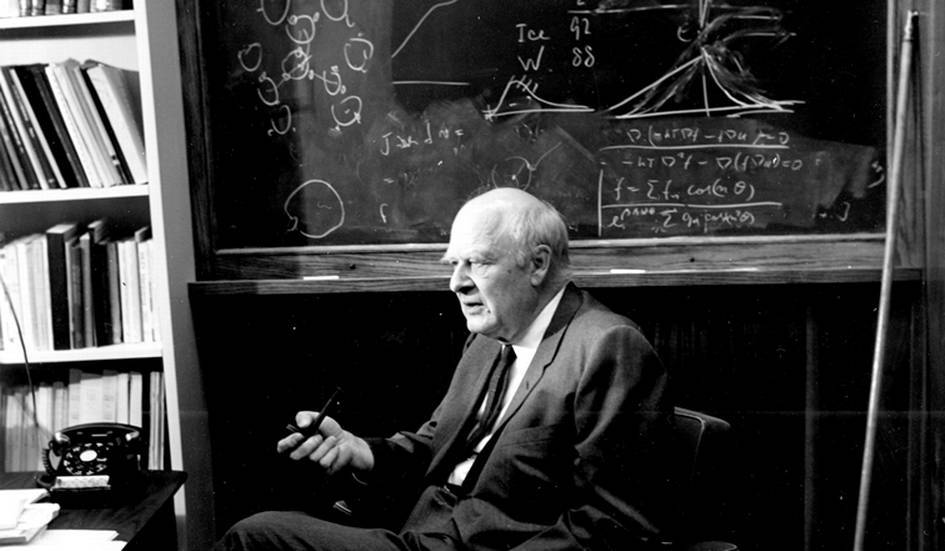
Lars Onsager in his office at the Sterling Chemistry Laboratory at Yale University. Photo: Yale Picture Collection / Arkivsenteret at Dora.
Onsager stamp

Lars Onsager on stamp. Norwegian Post's 2003 series of stamps with Nobel Laureates.