Research Autumn in Bilbao
Research autumn in Bilbao
By David Baumgartner, PhD Candidate in work package DATA, NorwAI

In October and November 2025, I spent two months in Bilbao as a visiting researcher at the Basque Center for Applied Mathematics (BCAM), an international research center dedicated to applied mathematics in the heart of the city. It was an intense and rewarding period of collaboration, new ideas, and long discussions about how to build better inductive biases into conditional normalizing flows.
Landing at BCAM
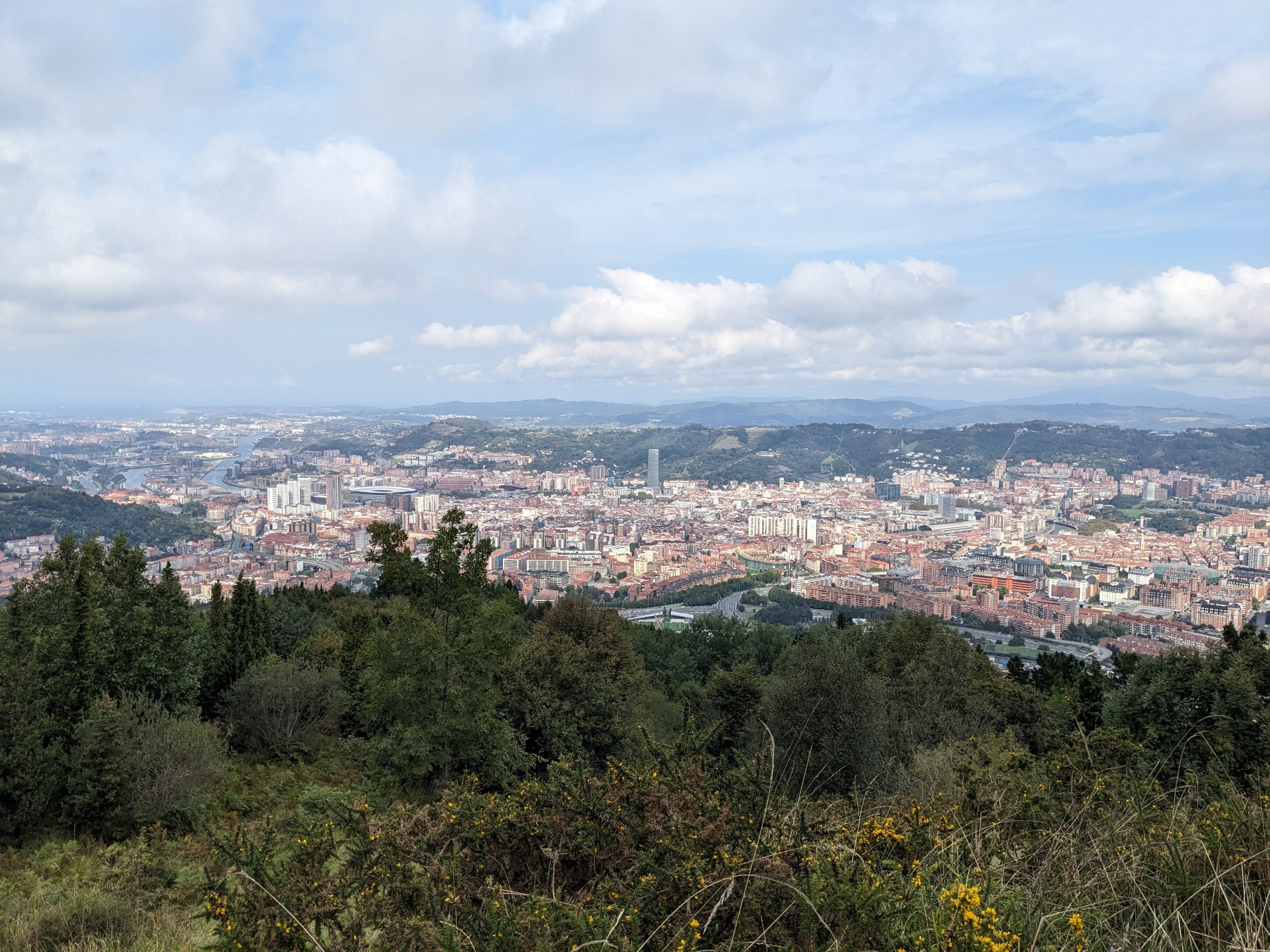
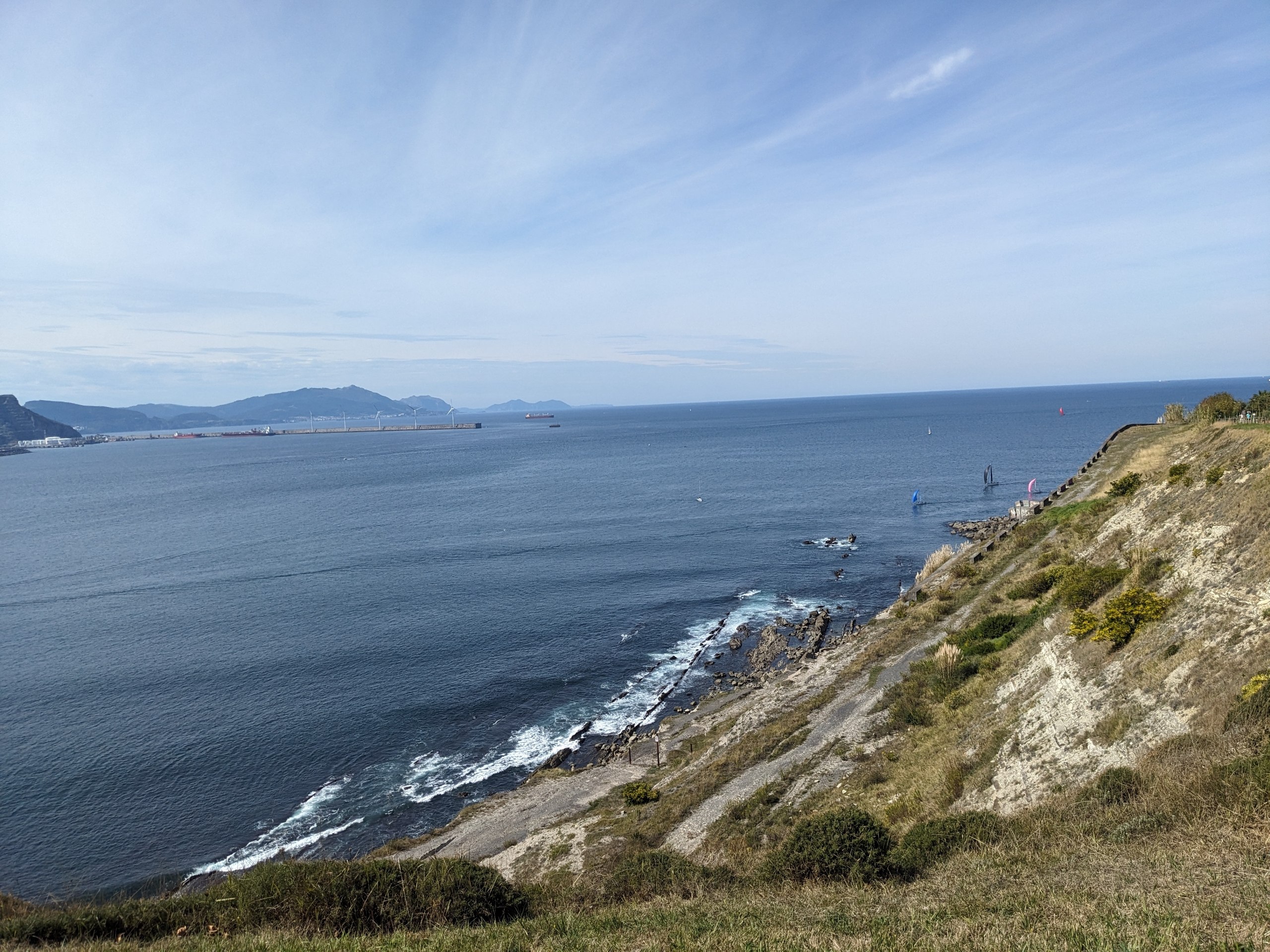
BCAM is located in central Bilbao and brings together researchers from around the world (including Italy, France, Brazil, and Chile) to work on topics ranging from partial differential equations to data science and artificial intelligence. Being embedded in such a focused mathematical environment for two months provided the perfect backdrop for deep, uninterrupted work on my PhD topic. I was also pleasantly surprised by the exceptionally warm late-summer weather, which made it easy to explore the city and its surroundings after work.
During my stay, I worked with Iñigo Urteaga and Eliezer de Souza da Silva, focusing on the role of inductive biases in the latent space of conditional normalizing flows. Our goal was not only to push theory forward, but also to ensure that the ideas would carry over to practical, real-world anomaly-detection problems. The collaboration was highly interactive and engaging, involving a mix of chalkboard sessions, coding, and iteration on small experimental setups.
Why Inductive Bias in Latent Spaces?
Normalizing flows offer a flexible way to model complex probability distributions by transforming a simple base distribution through a sequence of invertible mappings. In the conditional setting, we can incorporate temporal dependencies and additional context, which is particularly useful for time series and other structured data.
However, with this flexibility comes a familiar problem: the model can easily overfit, learn spurious patterns, or fail to generalize in meaningful ways. In our discussions at BCAM, we focused on the latent space as the natural place to encode assumptions about structure, smoothness, and behavior under different conditions. We explored how to encourage structure in the latent space that reflects domain knowledge, such as smooth temporal trajectories or clustering by regime.
From Theory to Practice: Statnett Data
The real test for any of these ideas is whether they help with real-world data. Back in Trondheim, the approach we developed is now being prepared for application to data from Statnett. The goal is twofold: (a) Anomaly detection: identify unusual events or behaviors in the time series that might indicate faults, rare conditions, or emerging issues. (b) Behavior characterization: go beyond binary “anomaly vs normal” to understand different operational regimes and behavioral patterns in the data.
The inductive biases we explored in Bilbao are designed to help the model distinguish between normal variability and genuinely atypical events in this kind of structured time series. If the latent space is organized in a way that respects the underlying physics and operational patterns, anomalies should not just be outliers numerically, but also qualitatively different in how they appear in the latent representation.
Reflections on the Stay
Beyond the technical progress, the research stay in Bilbao was a reminder of how valuable it is to step out of one’s usual environment and immerse oneself in a different research culture. Being at a center that lives and breathes applied mathematics, surrounded by people working on everything from PDEs to data science, helped sharpen my thinking about where my own work fits in the broader landscape.
The collaboration with Iñigo and Eliezer was both productive and motivating, and the two months in Bilbao, supported by NorwAI, gave my PhD pursuit a clearer direction. Now the focus is on validating those ideas on Statnett data here in Trondheim and, hopefully, turning that autumn in Bilbao into concrete results and publications.
Published: 2026-05-26