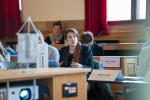
Sustainability workshop photos - Sustainable Scenarios and Indicators
Pathways to Sustainable Development:
Scenarios for Energy Transition Acceleration
Recent reports, like the UNEP Gap reports, show that the temperature will rise far above the Paris Agreement goals unless countries deliver more than they have promised. The global stocktake at COP28 recognizes the science that indicates global greenhouse gas emissions need to be cut by 43% by 2030, compared to 2019 levels, to limit global warming to 1.5°C. Also, it states that current progress is insufficient to meet the Paris Agreement goals. At the same time, there is an increased focus on other Sustainable Development Goals (SDGs) that need to be addressed in parallel with the climate challenge.
In this workshop, we will take three perspectives on the need for revised strategies and the roles of models and sustainability analyses in the process:
- The global perspective on climate strategies, including international cooperation, geopolitical tension, trade wars, and their welfare effects.
- The European energy system and the role of decarbonization of industry and transport in European climate policy.
- Quantitative and qualitative analyses of concurrent achievement of SDGs.
Conclusion
The workshop concluded with a strong consensus on the need for a multifaceted approach to accelerate the EU's energy transition. The discussions not only underscored the challenges but also illuminated the opportunities that lie ahead in leveraging technological innovation and adaptive policy frameworks. The insights gained from the workshop aim to inspire continued collaboration and action towards achieving a sustainable and resilient energy future for Europe.
To learn more about the workshop outcomes or to engage in ongoing discussions, visitors are encouraged to reach out through the provided contact information.
Program:
| Time | Topic |
|---|---|
|
09:00 – 09:15
|
Welcome and Setting the Scene
|
|
09:15 – 10:15 |
Framing of the Day: The global stocktake process indicates that it is easy to state ambitious goals, but how can these be followed up by policies and measures as well as action.
|
|
10:15 – 10:40 |
Coffee Break
|
|
10:40 – 12:15 |
Global Scenarios: The session focuses on the challenges related to an urgent need for increased ambition in climate actions toward Paris goals and how that is affected by changes in international cooperation, geopolitical tension, and the potential for trade wars. We look, in particular, at how today's models can address these issues and what answers they give. In addition, the discussion will address gaps in modelling capabilities.
Interventions James McFarland (EPA) 3 min Discussion |
|
12:15 – 13:00 |
Lunch
|
|
13:00 – 14:30 |
European Scenarios: In the European Union, decarbonization strategies for energy, industry, and transport after the Ukraine war face the additional challenge of scarcity of energy resources, security of supply considerations, and an increased focus on affordability. In this session, we address how today's state-of-the-art energy system models and frameworks address these challenges and also what are the current gaps in capabilities.
Interventions
Discussion
|
|
14:30 – 15:00 |
Break
|
|
15:00 – 16:25 |
Sustainability, Economic and Environmental Indicators from Scenario Studies: The energy transition has to take into account the embeddedness of the energy system in the (global, national, regional) socio-economic frame, not only due the far-reaching ecological, social and economic effects of the transformation. The socio-economic frame is on the one hand the main driver of the transformation process, but on the other hand it sets boundaries for amongst others policies and investment decisions. A comprehensive analysis of the different factors with the aim to identify sustainable transformation pathways is required. This session will discuss the current state-of-the-art of energy scenario-based sustainability assessment.
Interventions
Discussion
|
|
16:25 – 16:35 |
Closing and wrap up, Asgeir Tomasgard (NTNU) |
Practical information:
Thursday 14 March: 8:30 - 16:15
- Moderated presentations, discussions, and breakout sessions.
- Modified Chatham Rules
- Location: Rådsalen
- Estimated seats: 50
- Organisers:
Asgeir Tomasgard, Jae Edmonds, Christian von Hirschhausen, Witold- Roger Poganietz and Pedro Crespo del Grandao