
Tradition Meets Transition: Rethinking Energy in Norway’s Cabin Culture
Tradition Meets Transition
Rethinking Energy in Norway's Cabin Culture
Norway's cabin life has long symbolized simplicity, nature, and togetherness - a cherished tradition built on wood stoves, candlelight, and slow weekends. Yet today's hytter increasingly resemble fully equipped second homes, complete with high energy demand and grid dependent comfort. What happens when a cultural symbol of "simple living" becomes an energy intensive lifestyle?
At the heart of this shift lies a crucial question: Should the future of cabin energy rely on ever expanding centralized grid infrastructure - or is it time to rethink the model and explore more decentralized, locally balanced, and potentially lower demand solutions?
This workshop explores the evolving role of cabins in Norway's energy landscape. We examine how rising electricity use in cabin fields affects local grids, public financing, and national sustainability goals - and whether decentralized solutions such as swarm grids, micro energy communities, and reduced demand models can offer a more balanced path forward.
Together, we ask: How can we honour the cozy cabin tradition while embracing a more sustainable, decentralized energy future? What trade offs are we willing to make - and what opportunities emerge when innovation meets heritage?
Program
| Time | Presenter | Title |
|---|---|---|
| 09:00 | Ida Fagerli & Tatiana Grandón, NTNU | Opening and welcome Introduction to the program of the day |
| 09:10 | Morten Gaustad, EnergiPartner AS | 40 Years of Experience with PV-battery off-grid systems (20 + 5 min) |
| 09:40 | Erik Shini, GridVille | GridVille NTNU – Sustainable Power by Students (10 + 5 min) |
| Short stretching break 10:00–10:10 | ||
| 10:10 | Miryam Katerine Chada, NTNU | Hyt-t-ing "Re-imagining cabin culture for the regeneration of socio-ecological systems." (10 + 5 min) |
| 10:30 | Tatiana Grandón, NTNU | Voices from the Cabin Field: Insights on Energy Needs and Usage Patterns (20 + 5 min) |
| Short stretching break 11:00–11:10 | ||
| 11:10 | Ida Fagerli, NTNU | Nordic Swarm – A new concept for energy access in remote cabin fields (15 + 5 min) |
| 11:30 | Lauri Karttunen, University of Turku | Effects of battery degradation modelling on sizing of off-grid PV-battery systems (15 + 5 min) |
| 11:50 | All | Final discussion |
Abstracts

Ida Fagerli
Nordic Swarm – A new concept for energy access in remote cabin fields
Discover Nordic Swarm, an innovative concept bringing reliable, sustainable energy access to remote cabin fields. This new approach blends smart technology with rugged Nordic design to create a resilient, self‑organizing power network. Join us to explore how decentralized energy can transform off‑grid living.

Tatiana Grandón
Voices from the Cabin Field: Insights on Energy Needs and Usage Patterns
Curious about how people really use energy at their cabins? Our new survey uncovers surprising trends in consumption, technology adoption and usage patterns. These insights offer a clearer picture of what cabin owners value—and what they're ready to change. Explore how user behavior can guide smarter, more resilient energy solutions.
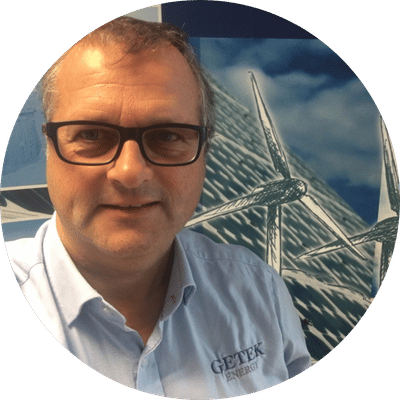
Morten Gaustad
40 Years of Experience with PV-battery off-grid systems
Morten Gaustad is the one person in Norway with the longest and deepest experience in off-grid solar PV systems. For 40 years he has been developing, designing, installing and operating such systems at places where you never believed solar PV could make the difference.

Erik Shini
GridVille NTNU – Sustainable Power By Students
GridVille NTNU er en studentorganisasjon ved NTNU som jobber med smarte og bærekraftige energiløsninger. Gjennom praktiske prosjekter får medlemmene erfaring med fornybar energi, mikronett og energistyring. Gruppen fokuserer på læring, samarbeid og anvendelse av eksisterende teknologi i reelle prosjekter. Nå skal vi installere et energisystem på en DNT-hytte for å teste løsningene i krevende omgivelser.

Miryam Katerine Chada
Hyt-t-ing – "Re-imagining cabin culture for the regeneration of socio-ecological systems."
Katy takes a holistic approach towards cabin culture and the future of how we want to shape this tradition. She uses design thinking and co-design workshops for her research, to involve a broad audience and stakeholders. This presentation gives valuable insights in several aspects of re-thinking our cabin culture.

Lauri Karttunen
Effects of battery degradation modelling on sizing of off-grid PV-battery systems
In this presentation, preliminary results of our off-grid PV-battery system analysis are shown. Our aims are to (1) find the PV and battery sizes that would allow self-sufficiency for the off-grid loads, and (2) investigate how different battery degradation models affect the estimated battery lifetimes and sizing of the system. Especially, the implementation and comparison of the battery degradation models bring novel insights on the longevity of off-grid batteries, since the influence different battery degradation modes (cyclic and calendar) is often overlooked. Using four different cottage load patterns, we show that 100% self-sufficiency is achieved for battery capacities of 24-32 kWh and PV capacities of 6-20 kWp, while 98% self-sufficiency requires 8-12 kWh smaller battery and 2-10 kWp smaller PV. Different degradation models can have fourfold differences in the calculated battery degradation during the time-frame of one year. The reasons for these discrepancies together with a comparison of the five models used in our analysis will be presented.
Practical information:
Friday 20 March: 9:00 - 12:00
-
Moderated presentations and discussion
-
Location: Vollan, Studentersamfundet
-
Organisers:
Ida Fagerli and Tatiana Grandón