
Research

Below, you can find an overview of some of our ongoing projects in BREATHE CAG. If you have any questions, feel free to contact any of the team members involved.
Cohorts and registries
The HUNT Lung Study
PI: Sigrid Anna Aalberg Vikjord
The HUNT Lung Study is the respiratory part of the population-based Trøndelag Health Study (HUNT), with repeated measurements of lung function and respiratory symptoms over several decades. It is the basis for much of our research on lung function trajectories, COPD, asthma and multimorbidity. We are also planning the lung component of HUNT5.
Read more on the HUNT Lung Study web page and in the overview of the Lung Study in HUNT (PDF).
HUNT CT LUNG
Data collection: 2026-2027. PI: Sigrid Anna Aalberg Vikjord. PhD student: Mia Rødde
Collaborator: Applied Chest Imaging Laboratory (ACIL), Harvard Medical School
A follow-up of participants who took part in both Young-HUNT and the HUNT Lung Study, now in their mid-forties. Participants undergo paired inspiratory and expiratory chest CT, an extended lung function battery (spirometry before and after bronchodilator, diffusing capacity, body plethysmography, oscillometry and FeNO) and blood sampling at St. Olav’s Hospital and Levanger Hospital. The aim is to link lung function trajectories from adolescence to early structural lung disease.
Read more about the project here.
Norwegian COPD Registry 2.0 (Kolsregisteret 2.0)
Working group leads: Sigrid Anna Aalberg Vikjord and Gunnar Einvik (Akershus University Hospital)
A new national registry for COPD is being developed together with all four regional health authorities, the Norwegian Respiratory Society and LHL. The registry is designed for automatic data capture and will be opt-out based, providing data for quality improvement and research.
Norwegian Severe Asthma Registry
Co-lead: Sigrid Anna Aalberg Vikjord
A registry for patients with severe asthma, including patients on biologic treatment, to monitor treatment, outcomes and quality of care.
Clinical studies
NORTUNE
Multicentre study coordinated from Akershus University Hospital. St. Olav’s Hospital is a participating site.
NORTUNE studies digital follow-up of asthma with the AsthmaTuner system, which combines home spirometry with an app-based treatment plan. The study aims to include 150 patients with asthma by May 2027.
NOR-LUNG 1 (in preparation)
PI: Sigrid Anna Aalberg Vikjord. Co-investigator: Gunnar Einvik (Akershus University Hospital)
A planned national randomised trial on de-escalation of biologic treatment in severe T2-high asthma, with eight trial centres across the four health regions and Nordic scientific advisors. The funding application is under review.
PhD projects

Radiomics and lung function development
Timespan: 2024-2027.
PI and main supervisor: Sigrid Anna Aalberg Vikjord
PhD student: Mia Rødde
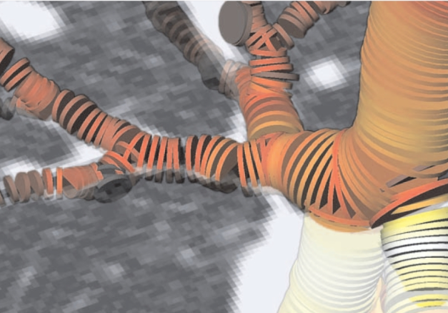
Individuals follow distinct lung function trajectories over the life course. This project links these trajectories to lung structure on CT imaging, using AI to explore what differentiates recovery from persistent impairment, and what this might mean for future prevention.
Eosinophilic subtyping
Timespan: 2025-
PI and main supervisor: Anders Tøndell
PhD student: TBA
Patients with T2-high severe asthma respond differently to biological therapies. This project studies eosinophil heterogeneity using spectral flow cytometry and other methods to explore what distinguishes responders from non-responders, and how this could guide more precise treatment.
Antibiotics use in COPD
Timespan: 2026-
PI: Sigrid Anna Aalberg Vikjord. Main supervisor: Johan Håkon Bjørngaard
PhD student: Magnus Myhre Berg (Levanger Hospital, Helse Nord-Trøndelag)
The project is part of Regforsk (Registry Research for the Health Services) at the Department of Public Health and Nursing, NTNU.
People with COPD receive antibiotics frequently, but patterns of use vary widely across patients, clinicians, and clinical situations. This project examines how different antibiotic strategies, across time, settings, and disease stages, relate to patient outcomes and health service use. Using linked national registry data and modern causal methods, the project aims to clarify when antibiotic treatment is likely to help, when it may cause harm, and how prescribing can be made more precise and sustainable.
Read more about this project here.
Contactless monitoring of COPD exacerbations (Prevent ECOPD)
Timespan: 2026-2029.
Main supervisor: Sigrid Nakrem. Co-supervisor: Sigrid Anna Aalberg Vikjord
PhD student: Berit Wærdahl Haanshuus
Exacerbations are the main cause of hospital admissions in COPD. As part of the Prevent ECOPD innovation project with VitalThings AS, this project studies contactless, sensor-based monitoring of breathing in hospital and at home after discharge, and how it can help detect exacerbations earlier and support nurse-led follow-up.
Nutrition, body weight and outcomes in COPD
PhD at the University of Gothenburg, Sweden. Supervisors: Lowie Vanfleteren, Jenny van Odijk (University of Gothenburg) and Sigrid Anna Aalberg Vikjord
PhD student: Maria Minter, dietitian, Sahlgrenska University Hospital
Body weight and diet matter for how COPD develops and progresses, but the evidence is still limited. Using HUNT together with other Scandinavian cohorts, the project studies how body mass index relates to mortality in COPD across four cohorts (HUNT, CCHS, CGPS and OLIN), and how dietary patterns relate to lung function and new cases of COPD over 11 years in HUNT. Maria received the award for best oral presentation at the Swedish Lung Congress 2026.
Multimorbidity before COPD
PhD at Aalborg University Hospital, Denmark. Supervisor: Ulla Møller Weinreich
PhD student: Sebastian Tristan Ehlert Buchardt
Many people with COPD have other chronic diseases, and some of these may already be present before COPD is diagnosed. During a research stay with BREATHE CAG in 2025, Sebastian used HUNT data to identify biomarker-defined clusters of multimorbidity in adults with normal lung function, and studied how these clusters relate to later development of COPD. The work is carried out in collaboration with BREATHE CAG and Sahlgrenska University Hospital.
Postdoc projects

COPD: Mapping the journey through levels of Norwegian health care
Timespan: 2025-2028
Postdoctoral candidate: Kirsti Wahlberg
People with COPD move through the health care system in different ways, but we have limited knowledge of how these pathways relate to outcomes and resource use. This project maps patterns of health care utilisation across primary and specialist care, and examines how these relate to patient outcomes, costs, and adherence to national guidelines. The aim is to identify where care adds value, where it may fall short, and how services can be better aligned with patient needs and evidence-based practice.
Collaboration with Regforsk
COPD BioID
Timespan: 2025-2030. PI: Sigrid Anna Aalberg Vikjord. Funding: The Liaison Committee between Central Norway Regional Health Authority and NTNU
Originally a postdoctoral project for Sigrid Anna Aalberg Vikjord, later converted to a research project.
COPD BioID (Identification of novel biomarkers for COPD phenotypes) follows around 2,000 participants in Young-HUNT and the HUNT Study from adolescence, with lung function measured over about 30 years. By combining proteomics with lung function trajectories, exposure data and radiological phenotypes from chest CT (HUNT CT LUNG) in a GETomics framework, the project aims to find early, easily measurable biomarkers of COPD development, so that people at risk can be identified and treated before irreversible damage occurs. Promising markers will be validated in international cohorts through the CADSET consortium.
Innovation projects

Detect ECOPD
Clinical study, Department of Thoracic Medicine, St. Olav’s Hospital. Partner: Vitalthings AS
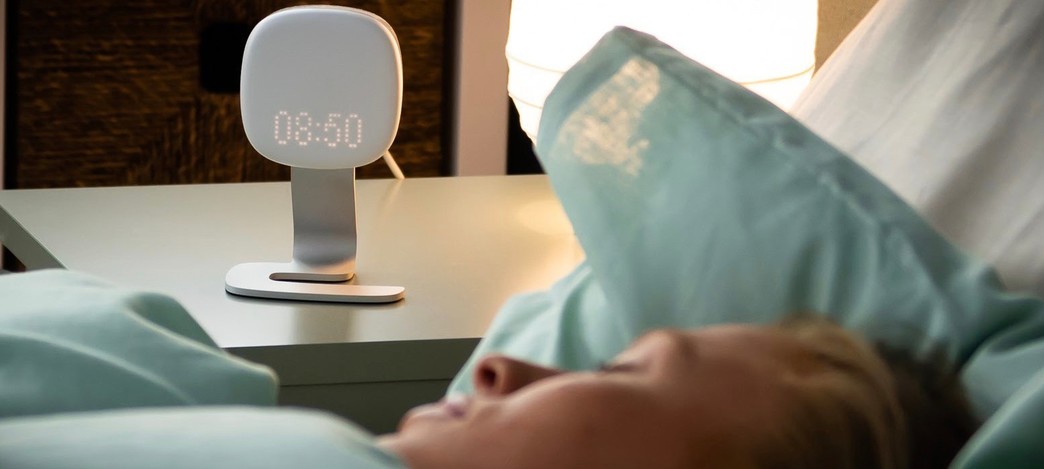
Detect ECOPD collects data from 50 patients admitted with a COPD exacerbation to the Department of Thoracic Medicine at St. Olav’s Hospital. Breathing is measured with a contactless monitor before and after nebuliser treatment. The data will be used in the pilot of Prevent ECOPD.
Prevent ECOPD
Innovation project in the business sector (IPN), funded by the Research Council of Norway, 2026-2029
Partners: Vitalthings AS (project owner) and St. Olav’s Hospital, Trondheim University Hospital. Collaborators: Ålesund Hospital (Helse Møre og Romsdal) and Akershus University Hospital.
PhD student: Berit Wærdahl Haanshuus
Around one third of patients admitted with a COPD exacerbation are readmitted within 30 days of discharge. Prevent ECOPD develops and tests contactless, sensor-based monitoring at home after discharge, to detect new exacerbations earlier and help prevent avoidable readmissions. The project looks at feasibility, patient pathways and possible effects on readmissions and recovery in routine care.
AsthmaTrack
Service innovation project, 2025-
Partners: Helseplattformen AS and the Service Innovation Centre at St. Olav’s Hospital (TIPS)
This project studies whether digital outpatient follow-up at the outpatient clinic at St. Olav’s Hospital can improve management of severe asthma and reduce the need for unplanned care. Patients on biologic treatment report their medication use and the Asthma Control Test (ACT) digitally three times a year, and are contacted by a nurse when needed. The model is now being explored for other chronic lung diseases.
Read more about the project here.
Watch the video about AsthmaTrack: YouTube
LearnSpiro
Educational innovation project, NTNU
Project lead: Sigrid Anna Aalberg Vikjord
LearnSpiro is a digital self-study and simulation tool for learning to interpret spirometry, aimed at medical students and junior doctors. The tool is now ready for user testing with medical students and residents, as part of the development of spirometry teaching at NTNU and St. Olav’s Hospital.
Other projects

Gut microbiome and lung health
Timespan: 2025-2028
Collaborators: SCAPIS (Sweden), University of Gothenburg
Combines data from HUNT4 and the Swedish CArdioPulmonary bioImage Study (SCAPIS) to study how the composition of the gut microbiome relates to lung function.
Lung function catch-up
Timespan: 2024-2026
Uses 25 years of repeated measurements in HUNT to study whether, and in whom, low lung function in early adulthood is followed by catch-up, and what this means for later disease.
Read the paper in ERJ Open Research.
Height-GaP: early growth and lung function
Collaborator: Jonas Eriksson Ström, Umeå University
Uses the difference between measured and genetically predicted adult height as a marker of early-life growth deficits, and studies how this relates to lung function in adulthood.
Genetics of oxygen saturation (SpO2 GWAS)
Collaborators: Elisa Moreno and Ben Brumpton, NTNU
A genome-wide association study of pulse oximetry oxygen saturation in HUNT4, with clinical input from BREATHE CAG.

pustebedre.no is a website under development by BREATHE CAG, with reliable and practical information about asthma and COPD for patients, their families and health personnel.