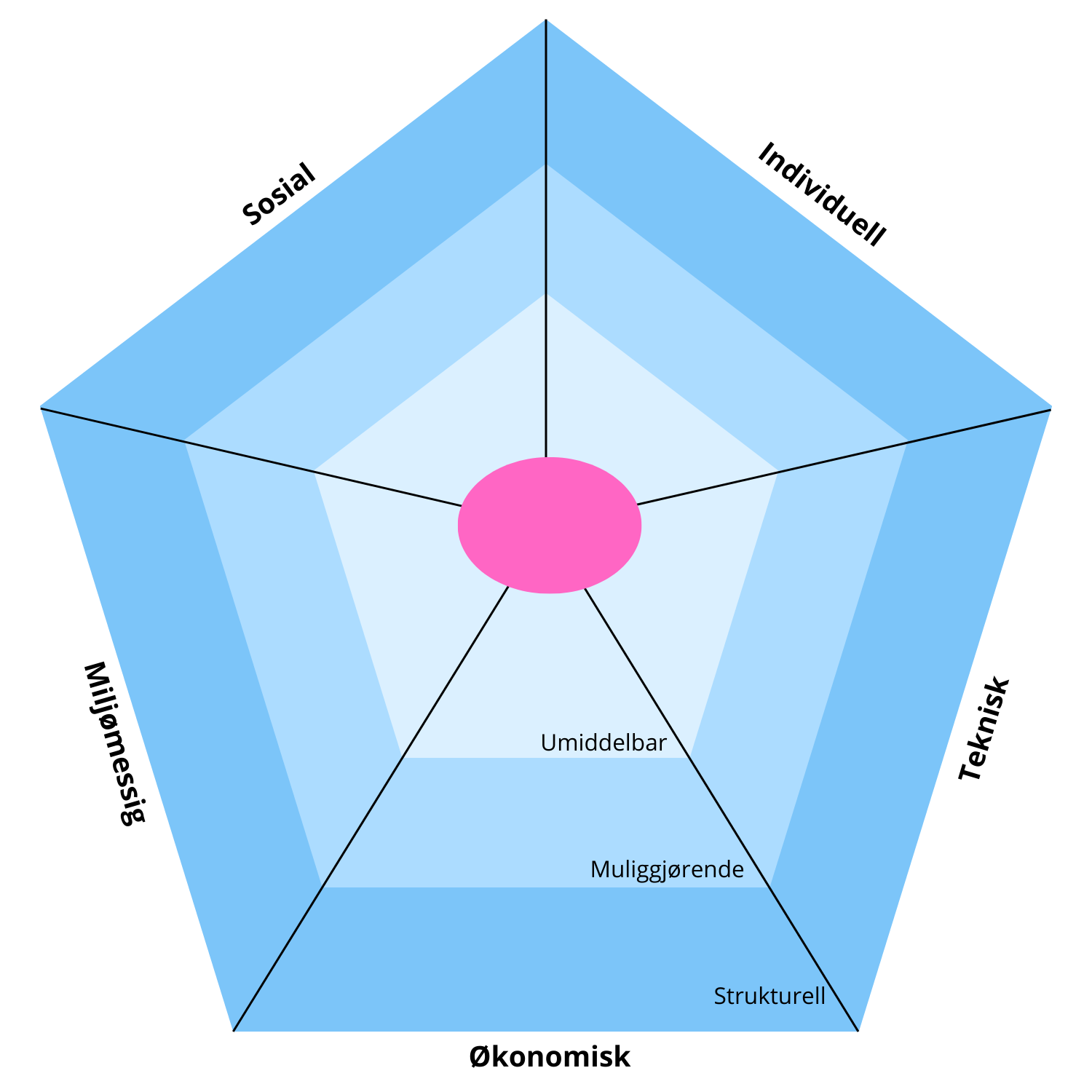
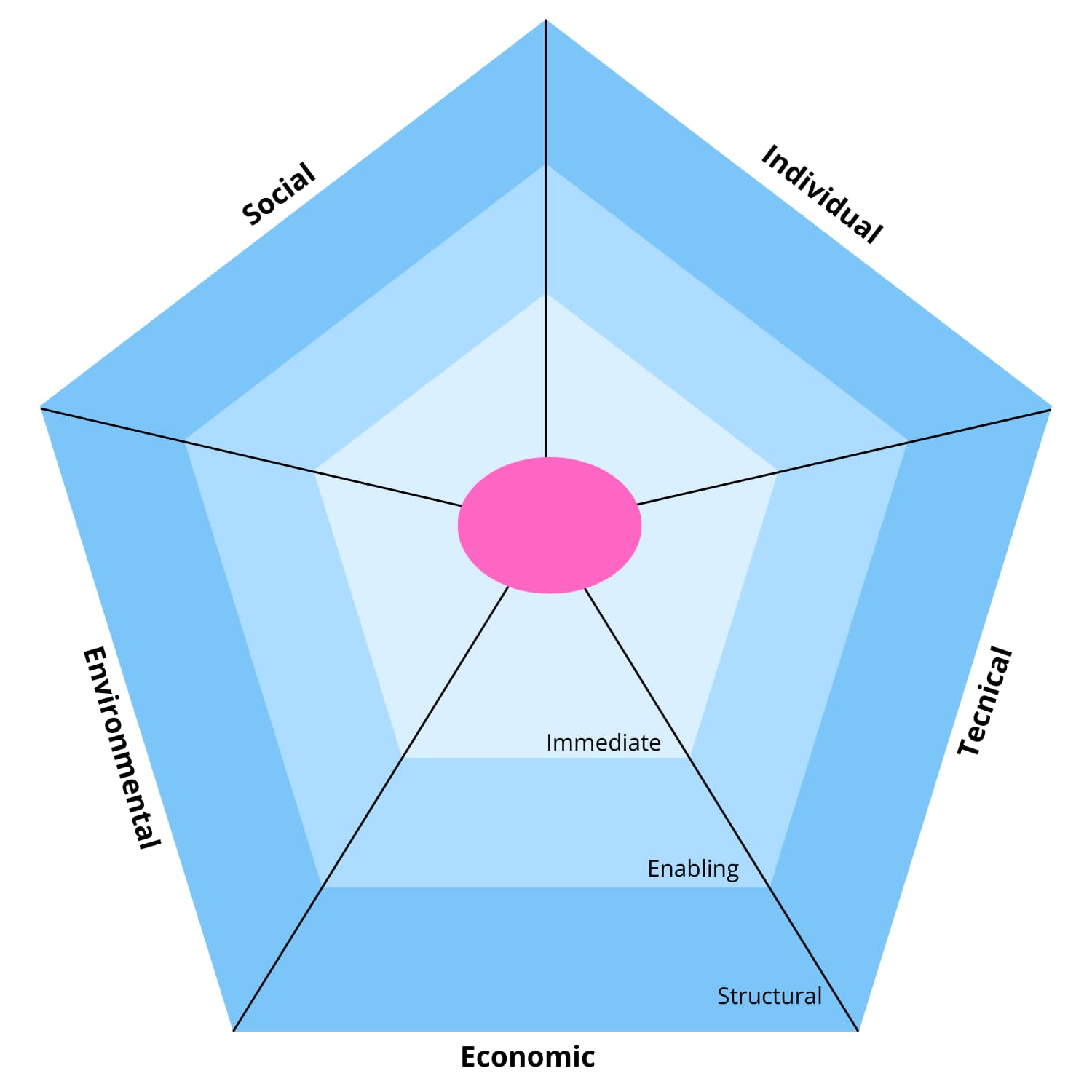
Example of sustainability analysis - Digital inclusion of the elderly
Example of sustainability analysis - Digital inclusion of the elderly (Hauge 2024, Master's thesis)
Digital Inclusion of Older Adults
Author: Ingvild Solheim Hauge
NTNU Open: Digital Inclusion of Older Adults
Short Description
Topic: Digital inclusion of older adults; examines the use of tools and training initiatives
Type of assignment: Technology introduction
Abstract
Modern society is increasingly technology-driven, which increases the need for digital competence to keep up. In this context, many older adults experience difficulties participating in the digital society, putting them at risk of digital exclusion. Previous research shows this is a widespread societal problem, and the consequences may include reduced quality of life and socio-economic challenges. Prior studies also describe measures that promote digital inclusion for vulnerable groups and outline how society should take action. The development of new technologies has led to changes in how users interact with digital services, offering increased usability and accommodation of users’ needs.
This study aims to provide new empirical insight into how older adults experience digital exclusion and inclusion in today’s society and to shed light on the underlying factors. This was studied by examining the use of digital tools and training initiatives among older Norwegians. It also investigated the extent to which existing training programs influenced the digital daily life of older adults and identified potential areas for improvement.
This case study is based on qualitative data: interviews and observations during digital training courses, as well as interviews with staff involved in digital guidance and senior researchers on digital exclusion. The findings highlighted a significant need for digital training among older adults and that many older adults wish to participate in the digital society. Further, factors for optimal digital training were identified, along with the needs and preferences of older adults, which can inform the development of technological solutions to promote inclusion.
Sustainability Analysis
Assumptions / Preconditions
The analysis is based on a scenario where training in digital tools for older adults works effectively and where the tools have a universal design suitable for most older adults.
This assignment focuses on digital inclusion of older adults and how it can be achieved through training in relevant digital tools. Thus, it has a clear sustainability profile with a focus on the human dimension of sustainability.
The following assumptions were made in the sustainability analysis:
- The solution under consideration (center of the diagram) consists of the tools together with training in the tools.
- The analysis is based on a scenario where training in the tools and the use of the tools is effective. This is reflected in two sustainability effects on the technical dimension: Tools are universally designed, and Relevant training is provided.
- Even in this initially positive scenario, both positive and negative sustainability effects can be imagined.

Individual Impacts, Immediate
- I11: Older adults experience mastery when learning to use tools
- II2: Increased confidence when interacting with digital solutions
These immediate positive effects can lead to enabling effects on the same dimension (illustrated with arrows in the diagram):
Individual Impacts, Enabling
- IE1: Ability to communicate digitally with family and services
- IE2: Increased sense of belonging and social value
- IE3: Improved digital competence
As a consequence of older adults’ ability to participate in society, there can be systemic effects on the human dimension:
Individual Impacts, Structural
- IS1: Increased agency and better mental health
- IS2: Long-term enhancement of quality of life and independence
- IS3: Increased participation in societal decisions through digital inclusion
These structural effects can in turn enable further effects on the same dimension:
Social Impacts, Enabling
- SE1: Older adults can use tools
- SE2: Increased human contact through tool usage
- SE3: Ability to participate in society
As a consequence of older adults’ societal participation, structural social effects occur:
Social Impacts, Structural
- SS1: Strengthened social cohesion
- SS2: Well-functioning democracy
- SS3: Reduced social isolation among older adults
Agency and health of older adults also have enabling economic effects:
Economic Impacts, Enabling
- EcE1: Reduced need for healthcare services
This in turn leads to systemic economic effects:
Economic Impacts, Structural
- ES1: Economy adapted to an aging population
The participation of older adults in society, together with available resources for other societal tasks, influences environmental decisions:
Environmental Impacts, Enabling
- EnE1: Environmental measures receive sufficient resources
- EnE2: Good environmental decision-making
Systemic effects on the environment can then occur:
Environmental Impacts, Structural
- EnS1: Sufficient prioritization of the environment
However, positive immediate effects can also lead to negative outcomes if some older adults are still unable to use the tools. This may increase exclusion for those affected. Additionally, tool usage could replace human contact, negatively impacting societal participation:
Individual Impacts, Negative (Enabling)
- IE4: Older adults cannot use specific tools
- IE5: Reduced human contact (where tools replace or support such contact)
- IE6: Lower ability to participate in society
- IE7: Weakened agency and health
Consequently, structural social negative effects may occur:
Social Impacts, Negative (Structural)
- SS4: Groups are excluded
- SS5: Less effective democracy
Weakened agency and health also affect economic outcomes:
Economic Impacts, Negative (Enabling / Structural)
- EcE2: Increased need for healthcare services
- ES2: Economy struggles to adapt to an aging population
Negative impacts on democracy and participation, together with high healthcare demands, can affect environmental outcomes:
Environmental Impacts, Negative (Enabling / Structural)
- EnE3: Environmental measures receive fewer resources
- EnE4: Poor environmental decision-making
- EnS2: Insufficient prioritization of the environment
In table form:
| ID | Impact | Level | Affects | +/− |
|---|---|---|---|---|
| II1 | Older adults experience mastery when learning to use tools | Immediate | + | |
| II2 | Increased confidence when interacting with digital solutions | Immediate | + | |
| IE1 | Ability to communicate digitally with family and services | Enabling | + | |
| IE2 | Increased sense of belonging and social value | Enabling | + | |
| IE3 | Improved digital competence | Enabling | + | |
| IS1 | Increased agency and better mental health | Structural | + | |
| IS2 | Long-term enhancement of quality of life and independence | Structural | + | |
| IS3 | Increased participation in societal decisions through digital inclusion | Structural | + | |
| SI1 | Universally designed | Immediate | + | |
| SI2 | Relevant training provided | Immediate | + | |
| SE1 | Older adults can use tools | Enabling | + | |
| SE2 | Increased human contact through tool usage | Enabling | + | |
| SE3 | Ability to participate in society | Enabling | + | |
| SS1 | Strengthened social cohesion | Structural | + | |
| SS2 | Well-functioning democracy | Structural | EnE2 | + |
| SS3 | Reduced social isolation among older adults | Structural | + | |
| EcE1 | Reduced need for healthcare services | Enabling | EnE1, EcS1 | + |
| ES1 | Economy adapted to an aging population | Structural | + | |
| EnE1 | Environmental measures receive sufficient resources | Enabling | + | |
| EnE2 | Good environmental decision-making | Enabling | EnS1 | + |
| EnS1 | Sufficient prioritization of the environment | Structural | + | |
| IE4 | Older adults cannot use specific tools | Enabling | SS4 | - |
| IE5 | Reduced human contact | Enabling | - | |
| IE6 | Lower ability to participate in society | Enabling | - | |
| IE7 | Weakened agency and health | Enabling | - | |
| SS4 | Groups are excluded | Structural | - | |
| SS5 | Less effective democracy | Structural | EnE4 | - |
| EcE2 | Increased need for healthcare services | Enabling | - | |
| ES2 | Economy struggles to adapt to an aging population | Structural | EcE2, EnE3 | - |
| EnE3 | Environmental measures receive fewer resources | Enabling | - | |
| EnE4 | Poor environmental decision-making | Enabling | EnS2 | - |
| MS2 | Insufficient prioritization of the environment | Structural | - |