example 5 ERP
Sustainability analysis example: The Balance Between Global Standardization and Local Adaptation in ERP Implementations
The Balance Between Global Standardization and Local Adaptation in ERP Implementations
Authors: Ragnhildstveit, Brede Erland & Høidal, Vetle
NTNU Open: The Balance Between Global Standardization and Local Adaptation in ERP Implementations
Short Description
Topic: Examines how employees in a large organization experience the balance between global standardization and local needs when implementing a new Enterprise Resource Planning (ERP) system.
Type of thesis: Digital Business Development, ERP systems in large organizations
Abstract
The implementation of standardized Enterprise Resource Planning (ERP) systems in large organizations raises questions about how such systems can be adapted to local needs without losing the benefits that standardization can provide. In this bachelor’s thesis, we investigate how employees at ConocoPhillips Norway have experienced the balance between global standardization and local needs during the implementation of next-generation SAP (S/4HANA).
The study is based on qualitative interviews with employees in various roles and combines these insights with a socio-technical and change management theoretical framework, as well as a sustainability perspective through the Sustainability Awareness Framework (SusAF).
The findings show that the implementation has led to both technical and organizational challenges, where standardized solutions do not always align with existing work processes. This has resulted in the use of workarounds and a need for organizational learning. Limited access to time and resources for training and early involvement appears to have contributed to employee frustration during the go-live phase. At the same time, the informants highlight the potential of the new system, provided that room is made for local adaptation and continuous improvement.
The analysis demonstrates that the implementation is not merely a technological initiative, but a change project that requires interaction between technology, people, and organization. The thesis shows that successful ERP implementation requires more than technical rollout; it requires an understanding of local contexts and active user participation. The SusAF framework helps identify how the SAP implementation affects both economic considerations and the organization’s ability to manage change over time.
Sustainability Analysis
Although sustainability was not necessarily an explicit objective of the system implementation, the analysis reveals that the solution nevertheless has implications for sustainability across several dimensions.
The following assumptions were made:
-
The ERP implementation was carried out organization-wide
-
Not all employees received the same level of training
-
ERP implementation is understood as both a socio-organizational change process and a technical project
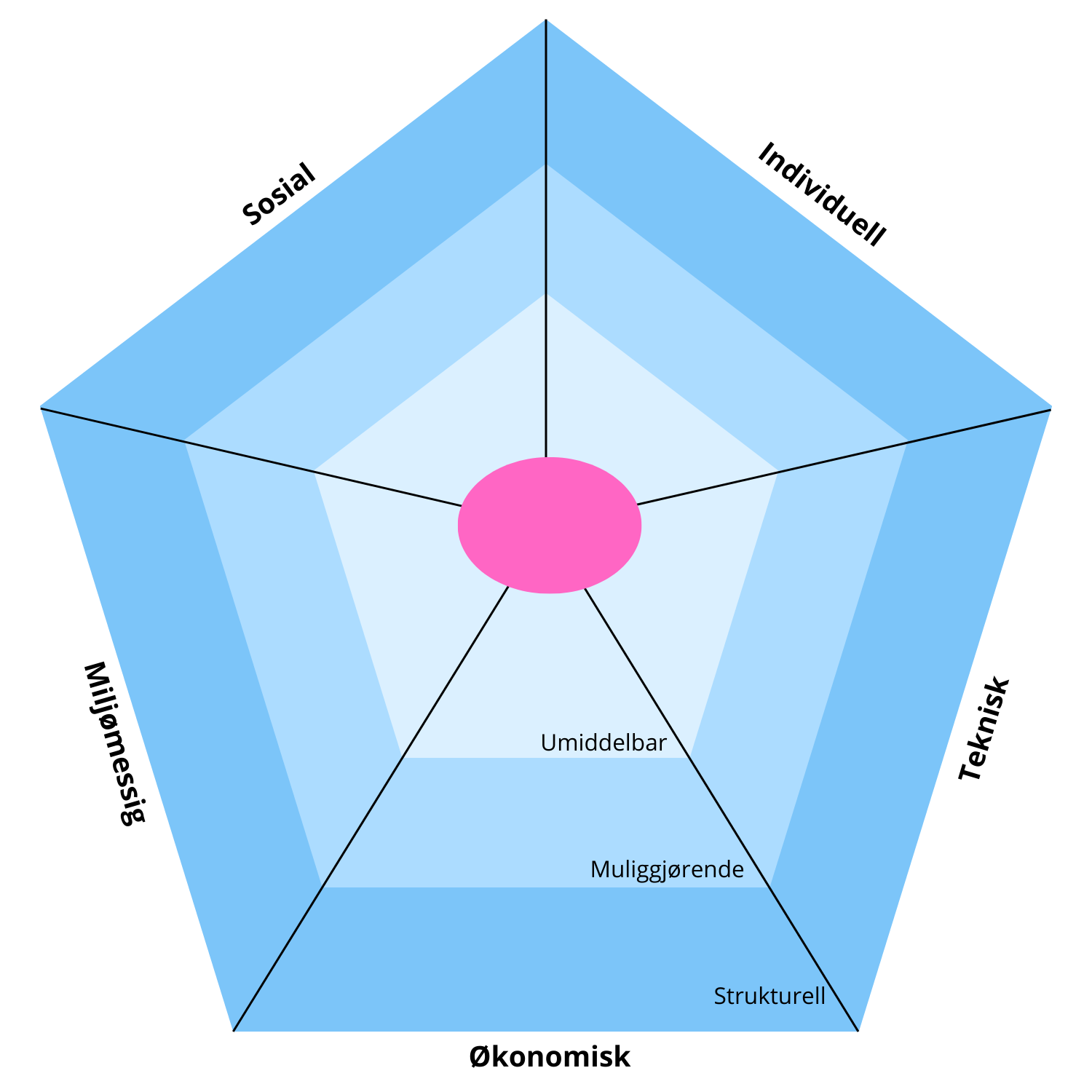
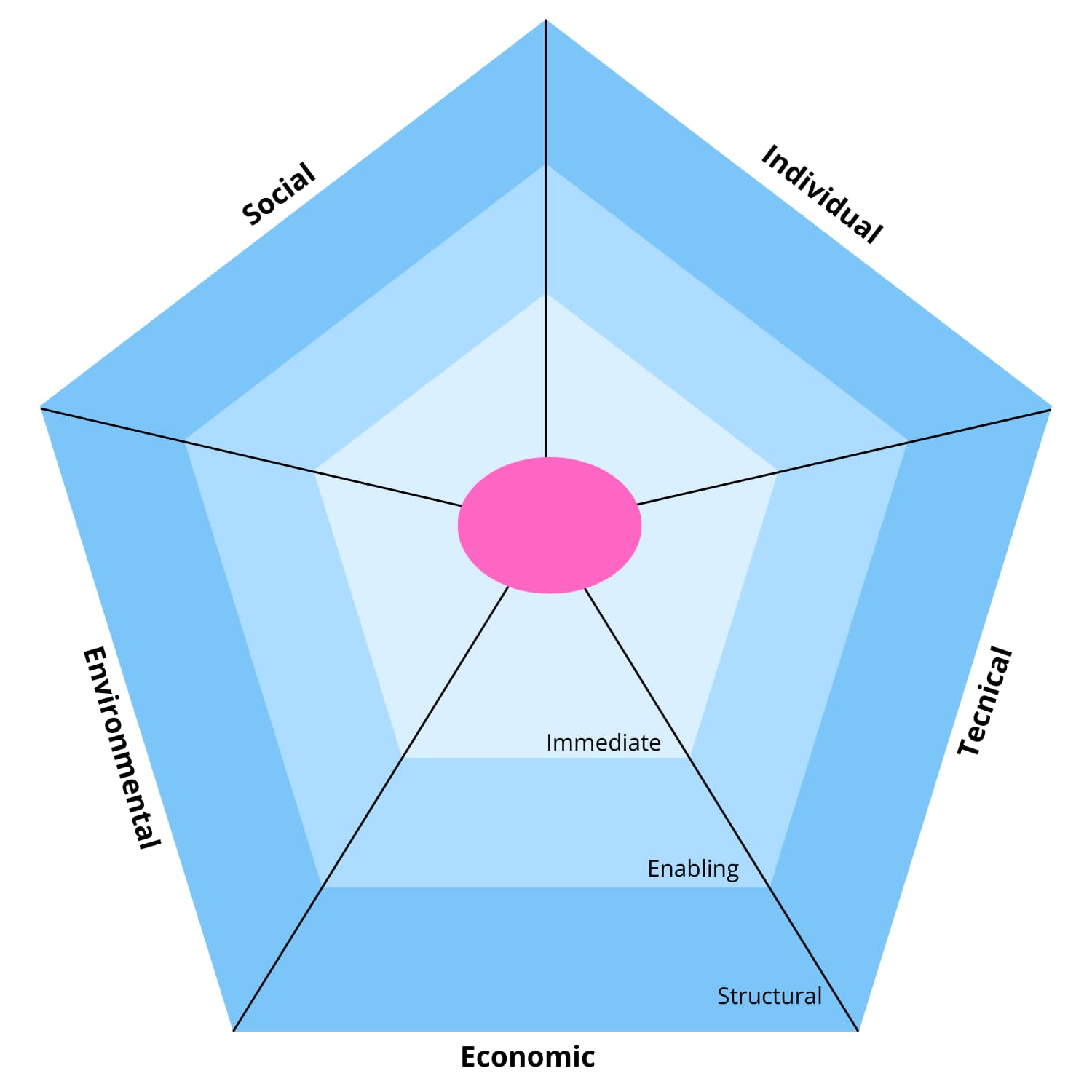
Using the SusAF framework, the following sustainability impacts were identified and represented.
In the following sections, the SusAF analysis conducted for the project is presented, highlighting the positive and negative sustainability impacts across the five dimensions: technical, social, economic, environmental, and individual.


Technical Impacts
The following enabling sustainability impacts were identified in the technical dimension:
|
TE1: Technical impacts, enabling; positive |
The following enabling sustainability impacts were identified in the technical dimension:
|
TE2: Technical impacts, enabling; negative |
The following enabling sustainability impacts were identified in the technical dimension:
|
TE3: Technical impacts, enabling; negative |
Comment:
The ERP implementation reduces duplicate work for employees, which is beneficial as it allows them to spend time on other important tasks. However, the system is complex, which can make it difficult to navigate and may lead employees to create their own “shortcuts” to complete tasks, increasing dependency on other personnel.
Social Impacts
The following enabling sustainability impacts were identified in the social dimension:
| SE1: Social impacts, enabling; positive Training has been acceptable, with digital job aids such as videos and guides. |
The following enabling sustainability impacts were identified in the social dimension:
| SE2: Social impacts, enabling; negative Insufficient training reduces efficiency, collaboration, and accessibility. |
Economic Impacts
The following enabling sustainability impacts were identified in the economic dimension:
| EcE1: Economic impacts, enabling; positive Digitized processes and improved data quality lead to better resource utilization and decision support. |
The following enabling sustainability impacts were identified in the economic dimension:
| EcE2: Economic impacts, enabling; negative Benefits at the corporate level may reduce flexibility and local well-being. |
Environmental Impacts
The following immediate sustainability impacts were identified in the environmental dimension:
| EnI1: Environmental impacts, immediate; positive Reduced paper usage and automated document management. |
The following enabling sustainability impacts were identified in the environmental dimension:
| EnE1: Environmental impacts, enabling; positive The ERP system can contribute to environmental goals through digital reporting and optimization. |
Individual Impacts
The following enabling sustainability impacts were identified in the individual dimension:
| IE1: Individual impacts, enabling; negative A steep learning curve and uncertainty may reduce motivation and weaken realized benefits. |
The following enabling sustainability impacts were identified in the individual dimension:
| IE2: Individual impacts, enabling; positive Better control over processes increases efficiency and sense of mastery. |
Relationships Between Impacts
A sustainability impact may lead to other impacts. The following interdependencies were identified in the analysis:
-
SE1 → IE2: Job aids and guides that employees can use as learning resources can lead to better process control, resulting in greater mastery and efficiency.
-
SE2 → IE1: Some employees point out that training has been insufficient, and this lack of adequate training may affect long-term individual development.
-
EE1 → EnE1 → EnI1: Digitized processes improve data quality and enable better resource utilization, aligning with UN Sustainable Development Goals 9 and 12. Digitalization leads to reduced paper usage and automated document management. Thus, even though ERP systems do not directly focus on sustainability, they contribute positively to the environment by digitizing workplace processes.
Summary Table
| ID | Impact | Level | Affects | + / - |
|---|---|---|---|---|
| TE1 | Enables precise control and reduces duplicate work | Enabling | + | |
| TE2 | Enables workarounds due to missing functionality and poor adaptation, weakening long-term sustainability | Enabling | - | |
| TE3 | Fragmented system landscape with many interfaces reduces usability and increases risk of errors | Enabling | - | |
| SE1 | Training has been acceptable with digital job aids such as videos and guides | Enabling | IM2 | + |
| SE2 | Insufficient training reduces efficiency and collaboration | Enabling | IM1 | - |
| EcE1 | Digitized processes and improved data quality enhance resource use and decision support; aligns with 9 and 12 | Enabling | MU1, MM1 | + |
| EcE2 | Economic gains may weaken local well-being and flexibility due to reduced adaptation | Enabling | - | |
| EnI1 | Reduced paper usage and automated document management | Immediate | + | |
| EnE1 | ERP systems can support environmental goals through digital reporting and optimization | Enabling | + | |
| IE1 | Steep learning curve may reduce motivation and digitalization benefits | Enabling | - | |
| IE2 | Better system control enhances efficiency and sense of mastery | Enabling | + |