Department of Physics
Physics is the foundation for natural sciences, and also has practical implications for our everyday lives. In fact, modern life is dominated by technological developments based on discoveries in physics, from ultra-fast computers to renewable energy technologies.
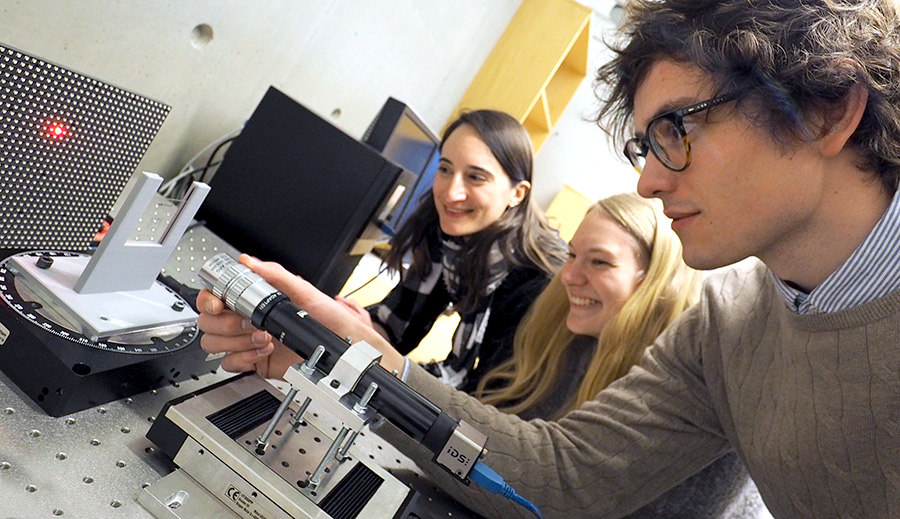
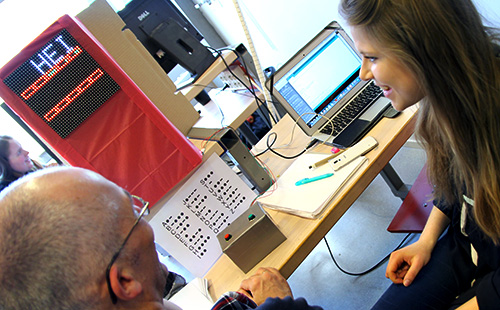
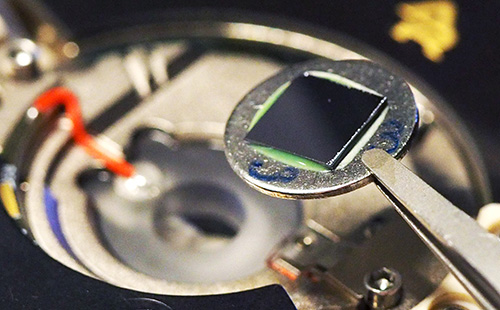
Our research spans a broad spectrum of natural sciences and technology, which in turn allows us to offer an education that provides a solid basis for future careers. Physics research is carried out in experimental as well as theoretical fields, often across conventional boundaries between disciplines. Our central research areas are materials science, nanoscience, surface physics, modern optics, astrophysics, solar energy, biophysics, and medical technology. Research staff at the institute make a special effort to increase the awareness and understanding of the importance and impact of physics in our society.
Department of Physics currently employs about 180 people. On average, about 2000 NTNU students a year take Physics courses.
Events
Research on teaching resources and learning environments in science education
June 19. 2013
Nordic workshop: Research on teaching resources and learning environments in science education in the Nordic countries, 8th -10th October 2013 in Reykjavík, University of Iceland. The aim of the workshop is bring together researchers and PhD students in science education to discuss research approaches and results, and share ideas for new research projects.
Research on teaching resources and learning environments in science education
June 19. 2013
Nordic workshop: Research on teaching resources and learning environments in science education in the Nordic countries, 8th -10th October 2013 in Reykjavík, University of Iceland. The aim of the workshop is bring together researchers and PhD students in science education to discuss research approaches and results, and share ideas for new research projects.
The focus in the workshop will on the development and use of teaching and learning resources in science education and the design of learning environments. The workshop is the final event in the NorSEd network, and will be a source of inspiration and ideas for bringing research and development in these areas of science education further in a Nordic setting. NorSEd provides financial support for travel and accommodation for participants.
Bilateral project between Norway and Japan
June 11. 2013
Sigurd Wenner, Takeshi Saito a
nd Randi Holmestad at Department of Physics were last week in Japan on a project meeting together with Jostein Røyset from Hydro and Calin D. Marioara at SINTEF. This was a meeting in connection to the bilateral project "The Norwegian-Japanese Al-Mg-Si Alloy precipitation project".
Bilateral project between Norway and Japan
June 11. 2013
Sigurd Wenner, Takeshi Saito a
nd Randi Holmestad at Department of Physics were last week in Japan on a project meeting together with Jostein Røyset from Hydro and Calin D. Marioara at SINTEF. This was a meeting in connection to the bilateral project "The Norwegian-Japanese Al-Mg-Si Alloy precipitation project".
Here they met with the Japanese collaborators in the project, professors from University of Toyama, Tokyo Institute of Technology and the RIKEN-RAL Muon facility. The meeting was held in the mountain area Tateyama, 2500 meters above sea level, close to Toyama.

They also had a meeting with the Dean of the faculty, Dr. Yuukou Horita. His field was within informatics, and he could tell that he had been in Trondheim at a conference on information technology last year.

The bilateral project is an industry-oriented knowledge building project with user involvement (NFR project 193619) where the support from Hydro is 20%.
Two PhD students, Takeshi Saito and Sigurd Wenner are educated within the project which will end next year.

Purpose of the bilateral project
Norwegian-Japanese Al-Mg-Si Alloy Precipitation Project
The primary objective is to identify impact of selected trace elements on precipitation and study vacancies in relation to trace elements in Al-Mg-Si alloys. This will be done in a bilateral Norwegian-Japanese research collaboration between Norway (NTNU, SINTEF, Hydro Aluminum) and Japan (University of Toyama, Tokyo institute of Technology).
Building up competence to understand these fundamental issues will be of general importance for the light metals community and can assist Hydro in increasing the quality and reduce the energy consumption in their future Aluminum products.

Wed, 12 Jun 2013 10:53:05 +0200
New book on superconductivity by Kristian Fossheim
May 15. 2013
Kristian Fossheim has written a book about discoveries and discoverers in the field of superconductivity, Superconductivity: Discoveries and Discoverers. Ten physics Nobel laureates tell their story. Fossheim is Professor emeritus at Department of Physics (NTNU) and President of The Royal Norwegian Society of Sciences and Letters (DKNVS).
New book on superconductivity by Kristian Fossheim
May 15. 2013
Kristian Fossheim has written a book about discoveries and discoverers in the field of superconductivity, Superconductivity: Discoveries and Discoverers. Ten physics Nobel laureates tell their story. Fossheim is Professor emeritus at Department of Physics (NTNU) and President of The Royal Norwegian Society of Sciences and Letters (DKNVS).
Publisher's description
This book is about the work of 10 great scientists; who they were and are, their personal background and how they achieved their outstanding results and took their prominent place in science history. We follow one of physics and science history's most enigmatic phenomena, superconductivity, through 100 years, from its discovery in 1911 to the present, not as a history book in the usual sense, but through close ups of the leading characters and their role in that story, the Nobel laureates, who were still among us in the years 2001-2004 when the main round of interviews was carried out. Since then two of them already passed away.
Abstract
Physics is a science which aims at answering the big mysteries in Nature. Physicists have always been attracted by the greatest challenges. But sometimes even the most demanding problems reveal themselves little by little. On the 8th of April 1911 a discovery was made through an apparently simple experiment in a glass flask of very special design in a physics laboratory in Leiden, Holland. The experiment set in motion a series of events with few parallels in the history of science. But physics was far from ready for the advent of superconductivity, the enigmatic phenomenon which Heike Kamerlingh Onnes and his student Gilles Holst had just observed. Today, more than a hundred years later, after great scientific research efforts and big investments, and after many impressive scientific and technical breakthroughs, a cloud of mystery still hovers over aspects of superconductivity. Nature continues to play her elusive game with the best minds of physics.
The book and the author
- Superconductivity: Discoveries and Discoverers (Springer)
- The author (Springer)
- Kristian Fossheim, Professor (em), Department of Physics (NTNU)
- Kristian Fossheim, Praeses at Det Kongelige Norske Videnskabers Selskab (DKNVS), (Board DKNVS)
- Personal homepage: Kristian Fossheim
Fri, 31 May 2013 14:39:21 +0200
Contact information
Phone: +47 73593478
Email: postmottak@phys.ntnu.no
www.ntnu.edu/physics
Visiting address
Høgskoleringen 5, Realfagbygget (Natural Science Building), D5-170
More contact information