Day 2 & 3 - FME BATTERY Academy 2026
Day 2 & 3 - FME BATTERY Academy 2026
Welcome!
Welcome to day 2 and 3 of our annual FME BATTERY Academy at IFE, Kjeller. This year, FME BATTERY and the EU Project SALAMANDER is teaming up, giving you an extended program over two days.
To accommodate different levels of experience, the academy will include two parallel tracks: (A) an track for participants new to battery technologies, and (B) a more advanced track with in-depth technical sessions for early-career researchers and industry participants. As part of the programme, the SALAMANDER Project will contribute dedicated sessions on self-healing battery materials, sensing technologies, and future battery monitoring concepts.
You are welcome to join any workshop that seems interesting to you, and do not need to follow a specific track.
Programme Day 2: Thursday, May 28
| When | Parallel A | Parallel B |
|---|---|---|
| Morning | Greenectra workshop by Frank Richter
|
Lectures on self-healing of battery materials feat. SALAMANDER
|
| Lunch | Everyone | Everyone |
| Afternoon | Lab course in IFE battery labs
|
Modelling Workshop in 3 sessions
|
Greenectra workshop
Why Battery Projects Fail: 7 Hidden Decisions That Drive Safety, Performance, and Circular Value
A 3-hour technical workshop for cross-functional battery professionals. Battery failures are not random - they’re the delayed result of early decisions in chemistry, manufacturing, testing, operating strategy, and design. This session exposes seven critical decision points that shape every project’s trajectory, showing where upstream choices cascade into safety risks, performance loss, or lost circular value. Participants leave with a clear map of their team’s exposure and the specific technical capabilities needed to make better decisions earlier.
Relevant for: Industry professionals working on f.ex. upscaling, small businesses improving a product, professors working on future battery material investigation and anyone interested in improving their success rates
Lab course in IFE Battery Labs
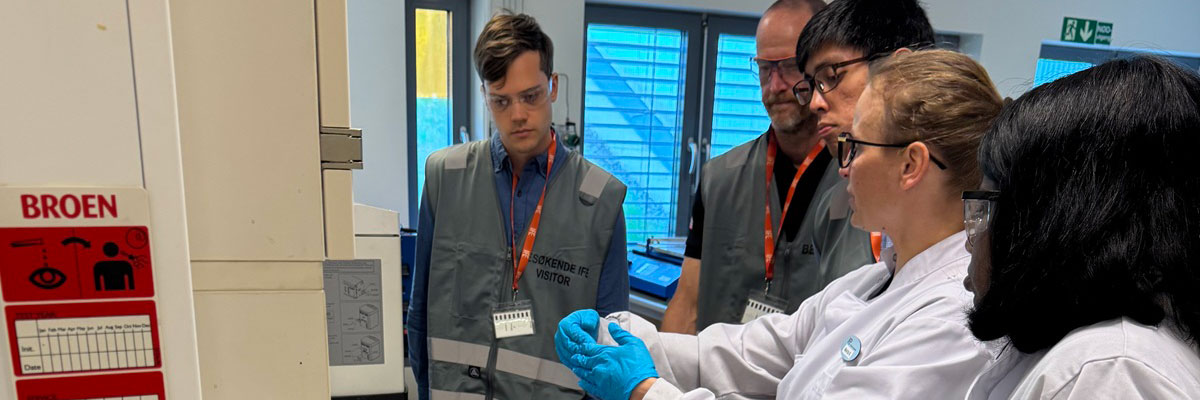
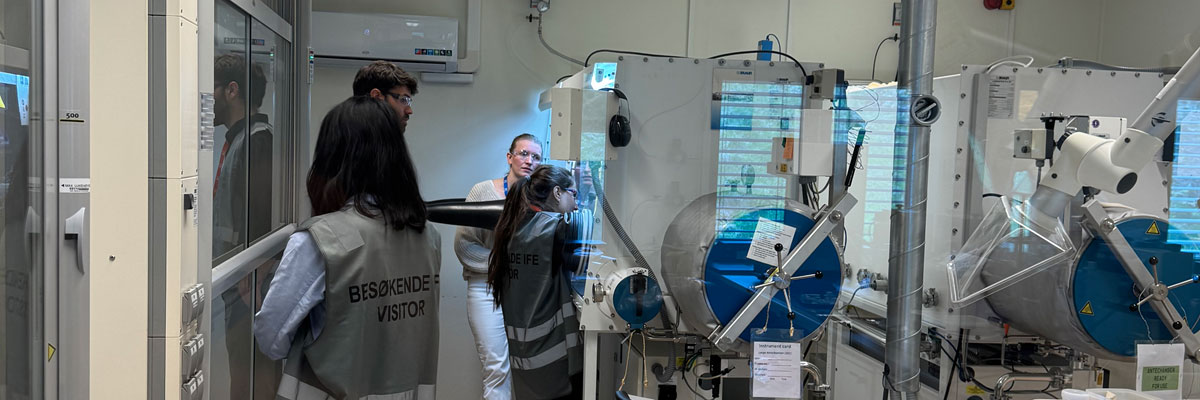
In this three hour workshop you will get a practical introduction to how we work in an R&D environment when testing new battery materials, and assessing their performance in coin and pouch cells. Three stations will take you through the steps of making a slurry, building a coin cell and how to upscale to pouch cells.
- Slurry mixing of a powder based electrode, either graphite or silicon
- Coin cell building inside and outside the glovebox
- Lab tour of NABLA Pilot Line, see the semi-automatic coating and assembly line
Relevant for: anyone interested in seeing what happens in the lab, students, those new in the field, lab-enthusiasts
Modelling workshop
In this three-stage workshop you will get an introduction to different digital tools for analyzing battery data, estimating electrochemical model parameters, and implementing the estimated parameters to simulate the thermal behavior of battery.
- Analyzing battery data from Arbin or Neware testers using open-source code CellPy (Jan Petter Mæhlen, IFE)
- Estimating entropy coefficient based on analyzed data using an open-source toolbox developed with the FME Battery, dSTool (Svenas Burba, UiA)
- Thermal modeling of battery using estimated data via BattMo (Lorean Hendrix, SINTEF).
No prior knowledge in modeling is required, a little knowledge on the basis of battery operation will be a bonus but not a requirement. This workshop aims to aid the battery community in design and optimization of experiments using the available digital tools, with the focus on understanding heat distribution during battery operations.
All the simulation and estimation will be done in python, and the needed packages will be installed during the beginning of the workshop.
Self-healing lectures by SALAMANDER
Here you will hear from participants in the SALAMANDER Project and learn more about sensors and self-healing. The lectures will give you an introduction into what is meant by "self-healing", how it can be studied and what problems the SALAMANDER team is trying to solve.
Programme Day 3: Friday, May 29
| When |
What |
|---|---|
| 08:30 | Arrival and registration at Instituttveien 18, 2007 Kjeller |
| 09:00 | SALAMANDER Summer School part 2: workshop |
| 12:15 | Lunch |
| 13:15 | SALAMANDER Summer School part 3: roundtable discussion |
SALAMANDER is funded by the European Union under Horizon Europe (Grant Agreement No. 101104028) and Horizon 2020 (BATTERY 2030+ CSA3, Grant Agreement No. 101104022). Views and opinions expressed are those of the author(s) only and do not necessarily reflect those of the European Union or CINEA.


When & Where
Day 2-3: May 28-29
Photos from last year's event