
Student stories
Student stories
Internship stories from IIB students
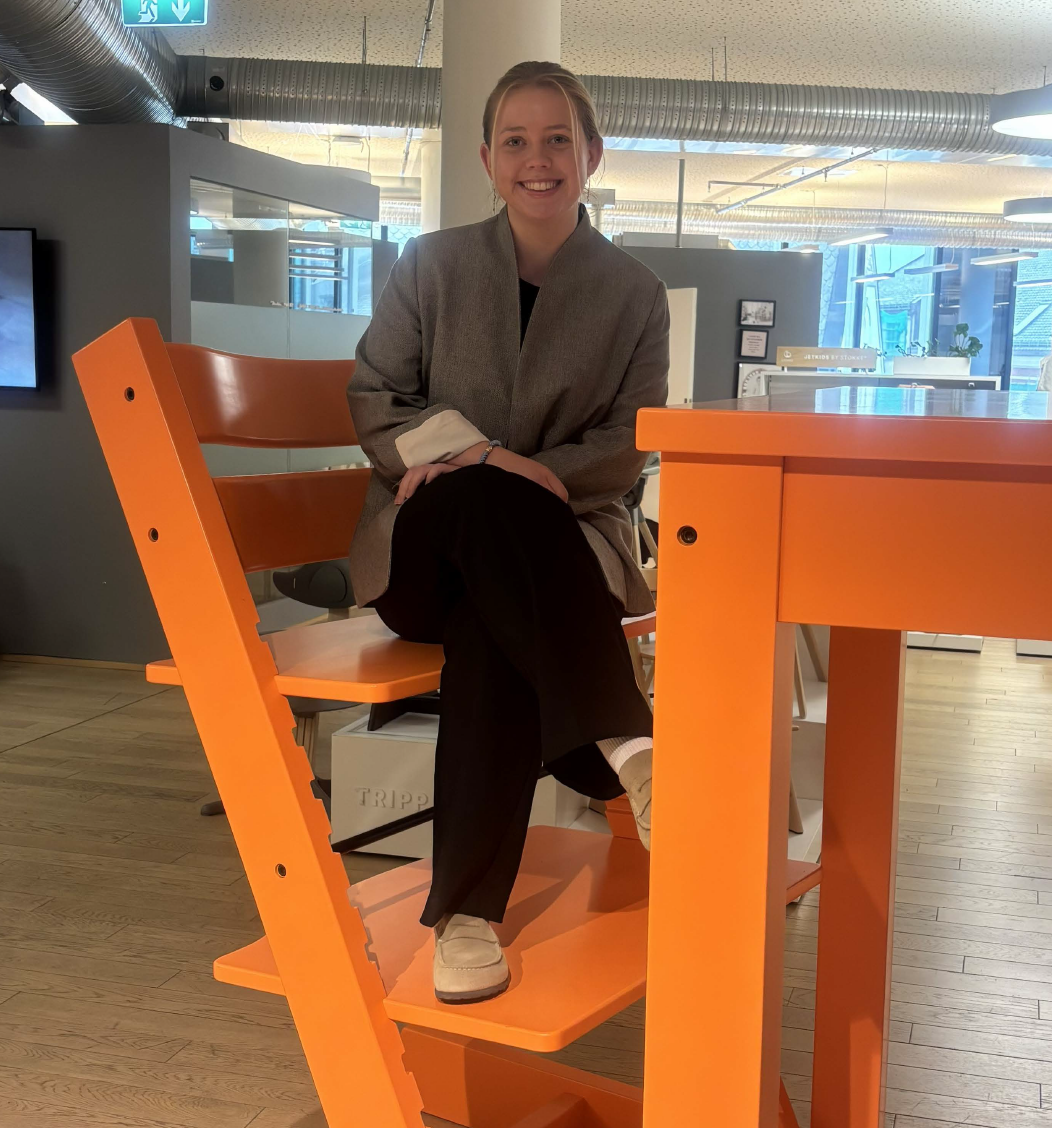

Name: Mille Hagen Høyeraal
Master's programme: Management of innovation and sustainable business development
Internship organisation: Stokke
Internship role/area: HR
Where are you doing your internship, and what are you working with?
I am doing my internship in the HR department at Stokke, an international company known for children’s products. My role is quite varied, which has given me experience with several different areas of HR. I have worked on improving the company’s onboarding and offboarding processes, updating and improving the employee handbook, and taking part in recruitment processes. In recruitment, I screen applications, communicate directly with candidates, and conduct interviews. In addition, I am working on a larger project related to employee experience and organisational culture. I started by analysing existing material and employee data, and together with an external partner I helped develop a survey and analyse the results. The next stage of the project involves individual interviews and focus groups to gain a deeper understanding of the findings and identify possible areas for improvement.
What has been the most interesting or valuable part of your internship so far?
One of the most valuable parts has been getting responsibility and being trusted with real HR tasks. I have especially enjoyed recruitment, where I have been responsible for candidate communication and conducting interviews. It has been interesting to learn how to assess candidates, ask the right questions and create a good experience for them throughout the process.
I also find my employee experience and culture project very interesting because I have been able to work through several stages of the process, from analysing existing information to collecting new data and identifying areas that could be improved.
How have you used knowledge or skills from your master's programme during the internship?
I have used several skills from my master's programme, especially analytical thinking and knowledge about organisations, leadership and organisational culture. For example, when analysing the employee survey, I have tried to look beyond the individual results and understand how different factors may be connected. My studies have also helped me when working with interviews and employee experiences, as I have learned the importance of understanding different perspectives rather than assuming that everyone experiences an organisation in the same way.
What have you learned from working in a professional environment that is difficult to learn in the classroom?
I have learned that real organisational challenges are often much less clear than the cases we work with at university. In the classroom, you are usually given a specific problem to solve, while in a company you often have to first understand what the actual problem is.
I have also learned a lot about communication and responsibility. When you are communicating directly with candidates, conducting interviews or working on processes that affect employees, you have to think carefully about how you communicate and how your work affects other people.
Has the internship influenced how you think about your future career?
Yes, the internship has confirmed that I enjoy working with people, organisations and development. I especially like the combination of working directly with people, for example through recruitment and interviews, while also doing more analytical and strategic work.
It has made me more interested in future roles within HR, people consulting, organisational development and change management. I have also realised that I enjoy having varied tasks rather than working within only one specific area.
What would you say to a student who is considering doing an internship as part of their master's degree?
I would definitely recommend it. An internship gives you the opportunity to use what you have learned during your studies in a real organisation, while also learning things that are difficult to experience in the classroom. It is also a good way to discover what type of work you actually enjoy. My advice would be to take initiative, ask questions and be open to different types of tasks, because that is often where you learn the most.

Name: Matteo Castelli
Master's programme: International Business and Marketing
Internship organisation: Solwr
Internship role/area: Competitor analyst
Where are you doing your internship, and what are you working with?
I’m interning at Solwr, a logistics-technology company in Ålesund. My project is “Competitor Analysis with the Use of AI”, which means I’m helping Solwr understand the competition its warehouse management system will face as it enters new markets. In practice, I map competitors, compare their pricing strategies and look at how they use AI.
What has been the most interesting or valuable part of your internship so far?
During my internship, I had the chance to visit a warehouse where Solwr operates. It was great to step out of the office, leave my Excel sheets behind for a morning and get some hands-on experience.
How have you used knowledge or skills from your master's programme during the internship?
I’ve used strategy and marketing tools directly. For example, I built a Competitive Profile Matrix to compare Solwr’s warehouse management system with its rivals. My coursework and past assignments gave me the frameworks that I applied to the real case.
What have you learned from working in a professional environment that is difficult to learn in the classroom?
Working with colleagues. Taking feedback and turning it into improvements isn’t something you learn in class.
Has the internship influenced how you think about your future career? If so, how?
This internship has made me realise that I want to work in an industry where new technology drives the business. Seeing Solwr enter a new market with a tech product showed me how exciting it is when innovation is at the core of what a company does, not just a support function.What would you say to a student who is considering doing an internship as part of their master's degree?
I’d definitely recommend it. It’s the fastest way to put what you’ve learned into practice.

Name: Johannes Mørkeset Osborg
Master's programme: MSc in Management of Innovation and Sustainable Business Development
Internship organisation: ÅKP AS
Internship role/area: Arena, business development and communication
Where are you doing your internship, and what are you working with?
I am doing my internship at ÅKP AS (Ålesund Kunnskapspark), which is a leading supplier within strategy and business development, clusters and network, technology, testing, digitalisation and innovation. ÅKP operates within many fields to facilitate growth, innovation and digitalisation through close collaboration with the public and private sector. My role within ÅKP is assisting in the company’s wide array of operations. This includes tasks like analysing the customer portfolio, preparation and execution of events, as well as communicating ÅKP’s activities to stakeholders through social media, website and e-mail.
What has been the most interesting or valuable part of your internship so far?
The most fun part of my internship so far has been contributing to the Maritime Cluster conference. This is a yearly event which gathers representatives from companies affiliated with the maritime sector in the region. It was fun to contribute to and see how such an event is prepared and executed. Additionally, the conference itself was very rewarding, as it provided industry insights through presentations and panel discussions. During the event I had the opportunity to talk to a lot of interesting people from small and large companies alike. The most valuable part of my internship so far has been gaining insights and hands-on experience in different aspects of ÅKP’s operations. Being able to try out variable tasks in different disciplines has been very valuable as it allows for me to get a feel for what I like to do, what I am good at, and vice versa. Being at ÅKP, which has close connections to the blue industries in the region, has allowed me to really get to know the industries and the companies within them.
How have you used knowledge or skills from your master's programme during the internship?
The internship has allowed me to convert theoretical knowledge from my master’s programme into practical value creation in a real business context. For example, I am following ÅKP’s ScaleUp program, which is a program where ÅKP supports businesses grow in a healthy manner, in which they utilise the MIT 24 steps for disciplined entrepreneurship. This is a framework I have used actively in my studies and am now able to use in real business development cases along with other theories and concepts.
What have you learned from working in a professional environment that is difficult to learn in the classroom?
There is a lot of valuable learning to be had in the classroom but getting a real feel for how a business is run on a day-to-day basis is hard to do at school. Also, working in an environment where everyone is doing widely different things to ultimately work for the same goal is an experience best gained through hands-on participation.
Has the internship influenced how you think about your future career? If so, how?
My internship has undoubtably influenced how I think about my future career. Firstly, being able to do different tasks has given me a good feel for what I want to work with and not. Secondly, gaining insights into different industries and companies through participating in events and talking to people has inspired me to want to work within specific industries, as well as enabled me to understand the wide array of professional opportunities present in the region.
What would you say to a student who is considering doing an internship as part of their master's degree?
I highly recommend it. An internship through NTNU provides an unmatched opportunity to get hands-on professional experience in an exciting business region. On top of it being an incredibly fun and rewarding experience, it is a fantastic way to put your career in motion.
Life as an international student at IIB

Name: Kathleen Somera Riguer
Home country: Philippines
Previous degree: Hotel, Restaurant and Institution Management
Why did you choose the master’s in international business and marketing/ master’s in management of Innovation and Sustainable Business Development at NTNU – and why Ålesund?
I chose Master’s in Management of Innovation and Sustainable Business Development because I had already been studying, involved in and raising awareness on sustainable development in the Philippines. I am very passionate about this field and want to learn more on a higher, leadership level, while innovation is something the world needs to address the demand of a continuously evolving society. Also because sustainable innovation is crucial not just for the present times but, more importantly, for the future. NTNU Ålesund offers the program that covers both sustainable development and innovation, so I took the chance. The timing couldn’t be more perfect.
What has it been like to study in a small and international learning environment?
It has been very interesting, motivating and eye-opening. I am here with my classmates who are from different countries as well, so we are all starting from scratch and learning together. It has been fun as we share each other’s experiences and insights. It also offers a deeper understanding of different cultures and backgrounds, given that we are a very diverse group. There have been many instances where I learned something new from them or learned the accurate version of a narrative, which was very different from what’s on the internet.
What has surprised you most about studying and living in Ålesund?
It is not my first time in Ålesund or Norway. I had been traveling back and forth since the pandemic, so I was not particularly surprised when I moved here. I just have always found it interesting that the options for products sold at stores and services offered here are somewhat limited. I come from the business district of the Philippines which is a big city, so I am used to more and universal options. As for the studying part, I was surprised that class attendance is not mandatory and some assignments can even be written in our mother tongue. It’s so cool.
What is student life in Ålesund like outside the classroom?
Before arriving, I wanted to be really involved in the community and the society. I joined a few student organizations and was voted as deputy class representative. This comes with responsibilities that I am very happy to fulfill because I want to make sure my classmates and I have meaningful and memorable experiences here. I am used to an active lifestyle so I joined NTNUi and now train in Padel and Dance, and regularly practice Yoga. I also think it is so nice that we have so many activities to choose from and have a very active lifestyle here. There’s always something to do or attend every day and I love that so much! We’re not just studying. We are also having the most fun and getting to enjoy the spectacular nature here. The student community is small so everyone contributes and is involved in their own ways. We know other students by name or by face. And since we’re an international batch, we are getting to know our classmates and other students at the same time.
What would you say to an international student who is considering applying?
If you’ve reached this point, maybe it’s a sign for you to start/finish that application. It is very exciting and I am totally loving the experience! It is so worth it. I believe it is important that we step out of our comfort zone and start a new adventure. Maybe this is a new place for you, maybe you’ve also been here before. But the new journey as an international student is a completely different experience. You will never know unless you try. There’s nothing to lose but everything to gain. So take the leap and take a chance on yourself. The experience might end up changing your life in ways you never thought possible. It has changed mine.

Name: Paulina Roman Guevara
Home country: Mexico
Previous degree: Bachelor´s in International Trade
Year of study: 2015-2020
Why did you choose the master’s in international business and marketing/ master’s in management of Innovation and Sustainable Business Development at NTNU – and why Ålesund?
I was interested in studying sustainability with a business perspective and having previously lived in Finland I was interested in the advanced interest, technology and regulations that the Nordic countries have. Upon searching for Universities, I found that NTNU was amongst the top levels and recognition.
What has it been like to study in a small and international learning environment?
It has been lovely. Living in a small town is great for a learning environment because it´s easier to get to know everyone, to get around and to feel welcomed by the University.
What has surprised you most about studying and living in Ålesund?
That I´m the only Mexican that I´ve met. I don´t know if there are other Mexicans at NTNU Campus Alesund but I haven´t met them yet. I am also surprised at how easy and quick it is to settle into the lifestyle.
What is student life in Ålesund like outside the classroom?
The internationals have their own group where we offer hang out options, for example; going to football games, bonfires, hikes and city walks.
Everyone is open and talkative and you can always find something to do even if it´s going to a chill café or watching a movie.
What would you say to an international student who is considering applying?
Take the risk. Moving to Norway might seem overwhelming but it is actually easier than it seems, with time you settle in, meet new people, have a lot of fun experiences and have great professors teaching you and helping you get prepared.
Life as an IIB student

Name: Patrick Olai Hansen
From: Ulsteinvik, Norway
Previous degree: Bachelor’s in Economics and Administration
Specialisation: International Business
Year of study: 1st year
Why did you choose the Master’s in International Business and Marketing at NTNU?
I wanted a programme that combines international business with close ties to real companies, and NTNU Ålesund offers exactly that. Working with local businesses throughout the programme gives us practical insight that is hard to get from textbooks alone. The programme also offers the opportunity to do an internship at a company, which gives real, hands-on work experience.
What were you looking for when choosing a master’s degree, and what made this programme stand out to you?
I have previously worked with companies that operate internationally, and I wanted to build on that experience with a deeper academic foundation. I was looking for a programme focused on business across borders. When I looked at the structure, I saw how well the courses build on each other. Together they give a complete picture of how international companies operate, and that made the programme stand out to me.
What is a typical week as an IIB student like?
We have four courses at a time, but not a lot of scheduled lectures, which gives a good balance between teaching and independent work. Every other week we have lectures from Tuesday to Friday, and in the weeks in between only on Tuesday and Wednesday. That leaves plenty of time for self-study, group work or other commitments. Some weeks also include company visits or case work based on realistic business scenarios.
What do you enjoy most about the academic side of the programme?
My favourite course so far is International Business Strategy. It alternates between lectures on theory and sessions built around case work. In the case sessions we analyse real challenges that local companies have faced. Company representatives sometimes join us, which gives us a first-hand look at how businesses actually handle these situations. That link between theory and practice is what I enjoy most.
What is it like studying in a relatively small class?
It’s one of the things I appreciate most about the programme. In a small class, you quickly get to know everyone, which makes it easier to work together on projects and to speak up in class discussions. The professors are approachable, and if you reach out to them, they follow up well. All in all, it makes for a close-knit and supportive learning environment.
Have you had the opportunity to work with companies or real business challenges during your studies?
Yes. We visited Ekornes at their headquarters to learn more about their international operations and see their production line up close. We also worked with a case from Vard, where we practised pitching our own ideas for how they could adapt their strategy to current market changes, using what we had learned in class. Afterwards we got feedback on the content of our pitches, which taught us a lot about what works and what could be improved.
What is it like to be a student in Ålesund?
It’s very rewarding, both academically and socially. The close ties to local industry let us apply what we learn to real situations, and since the class is small, everyone knows each other. There are also plenty of student associations where you can meet people with shared interests. I like the size of the city, too. It’s big enough to have everything you need, but small enough that it’s all close by. On top of that, the hiking opportunities around Ålesund are great, which makes it easy to get some fresh air between study sessions.
If you would like to hear more about studying at NTNU School of International Business and life as a student at NTNU Ålesund, feel free to contact Patrick at: pohansen@stud.ntnu.no