
The geographies of Just and Sustainable transitions
Geographies of Just and Sustainable transitions
-
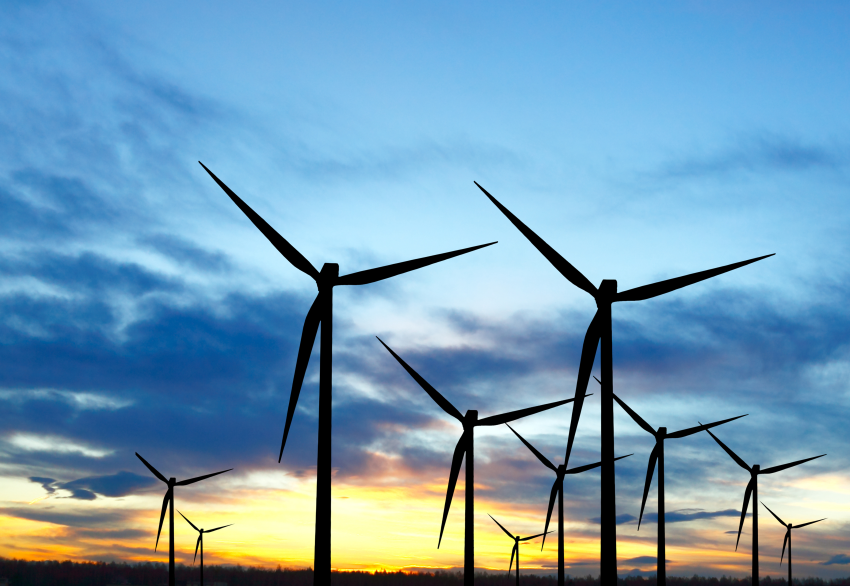
Photo: Shutterstock -
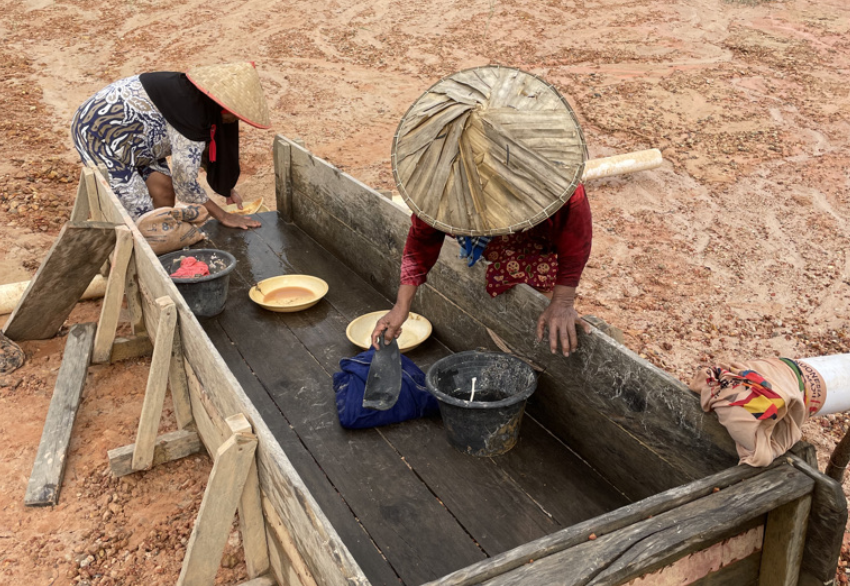
Photo: Ståle Angen Rye / NTNU -
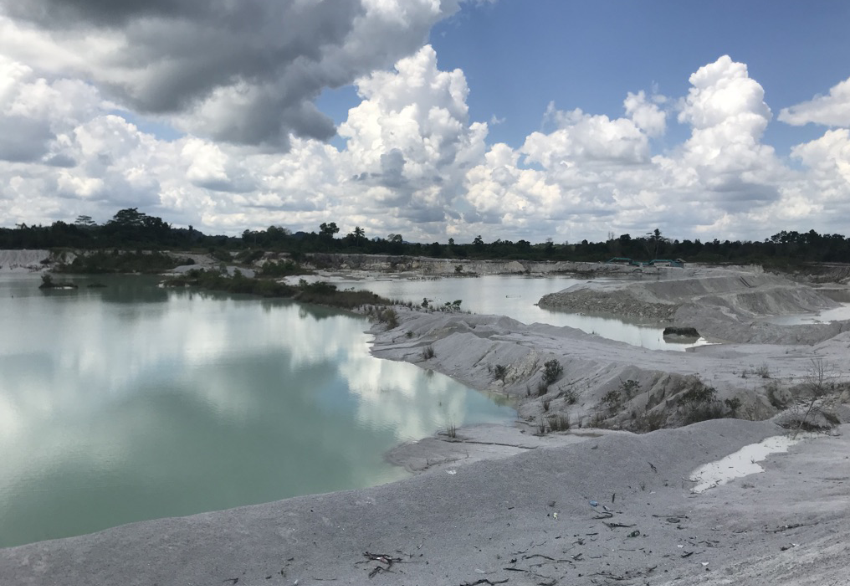
Photo: Ståle Angen Rye / NTNU -
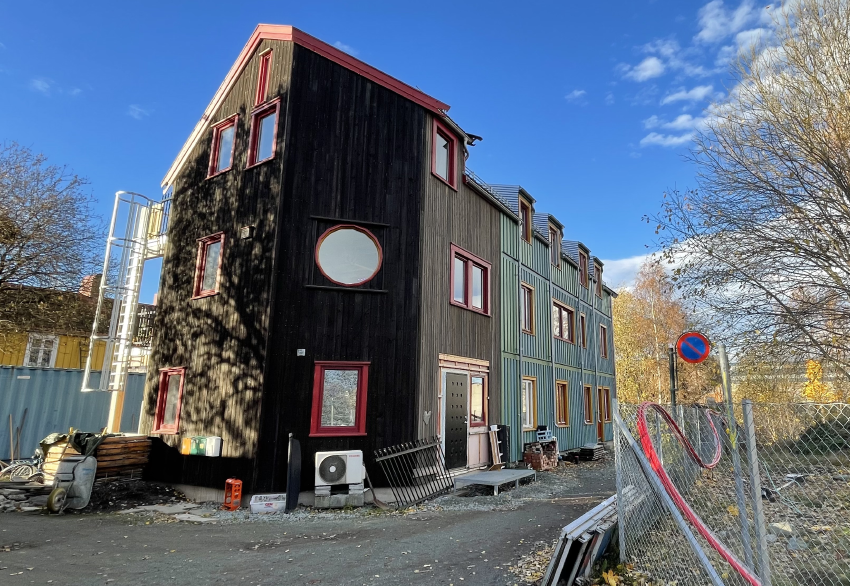
Photo: Ståle Angen Rye / NTNU -
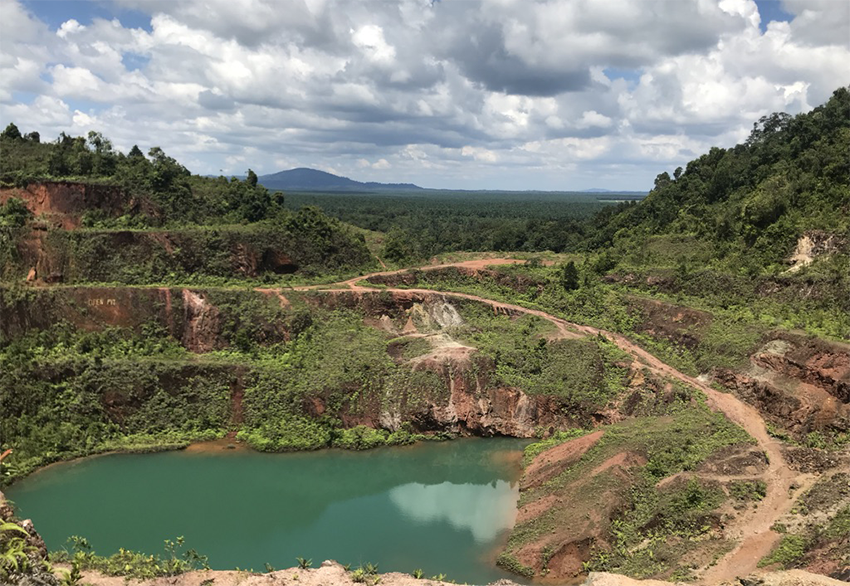
Photo: Ståle Angen Rye / NTNU

Geographies of Just and Sustainable transitions research group builds off the key experiences and competences from staff at the department engaged in research on topics that occur at the nexus between politics, economy, and space with a focus on sustainability, just transitions and societal inequalities. The group covers a broad range of topics where governance, innovation and participation is discussed in relation to energy transitions, sustainable regional and urban development, natural resource management, global production networks and alternative economies. At the core of our research is a notion that intertwined political and economic processes both constitute and are constituted by the social production of space. Our aim is to explain the spatial configuration and scales by which various political and economic processes are organized, in addition to highlighting geographical differences related to the outcomes of these processes.
Questions we ask are:
- Why does community participation in urban planning projects, natural resource management, and energy transitions widely differ across space?
- Why are the benefits and costs of societal transitions, such as the transition to a low-carbon economy, unevenly distributed across space?
- How is the global political economy of energy shifting and what are the implications for regional development and sustainability in different places?
- How are urban and regional development policies mobilized and translated across space, what is their impact, and why do they become a subject of contestation?
Projects we are involved in:
GreenBlack: At the Crossroad between Green and Black: The role of Oil & Gas in Norwegian Sustainability Transition Research & Innovation
GreenBlack: At the Crossroad between Green and Black: The role of Oil & Gas in Norwegian Sustainability Transition Research & Innovation
https://www.ntnu.edu/kult/at-the-crossroad-between-green-and-black
Alexander Dodge, Aleksander Myklebust
FME NorthWind (2021-2029)
FME NorthWind (2021-2029)
EnJuST Enganging with just sustainable transitions (2024-2028)
EnJuST Enganging with just sustainable transitions (2024-2028)
https://www.ntnu.edu/igs/enjust
Hilde N. Rørtveit (project leader), Ståle Angen Rye, Henrik B. Lund
The project seeks to enhance quality in higher education through international mobility and a field-based approach to learning. Our ambition is to provide opportunities for students to deepen their understanding of the uneven impacts of low carbon transition, through actively engage in research and dialogues with governments, industries, communities and fellow students. By engaging with the impacts of global low carbon transition on democracy, justice, and sustainable resources management, the project addresses a critical topic in global education.
GSW Making the green shift work for regions (2024-2028)
GSW Making the green shift work for regions (2024-2028)
Henrik B. Lund (project leader), Asbjørn Karlsen, Alexander Dodge, Jordan Everetts (PhD), Danny MacKinnon, Stuart Dawley, Camilla Houeland, Samson Afewerki, Mari Wardeberg and Markus Steen.
Labour markets vary between places, operating and performing differently based on their industrial histories and employment and skills profiles. As such, our project seeks to better integrate localities and regions, labour markets and working lives as central elements within green shift, rather than merely as outcomes of this transition. We will explore the regional skills ecosystem concept in Oil & Gas specialised regions.
A region’s skills ecosystem examines how the often place-specific demands of industry and employers interact and evolve over time with supplies of workers, skills and intermediaries. As the green shift unfolds, the ways in which different regional skills ecosystems adapt and change will vary and have important implications for processes of regional competitiveness and labour market inclusion.
EXPAND: Expanding the search for new ways of working along the Humanitarian-Development-Peace nexus (2024-2028)
EXPAND: Expanding the search for new ways of working along the Humanitarian-Development-Peace nexus (2024-2028)
https://www.prio.org/projects/2023
Hilde Refstie (lead Prio)
We live in an age defined by uncertainty, where a constant state of crisis seems to have become ʻthe new normalʼ. This reality has led to increasing numbers of displaced with no solution in sight. Humanitarian needs in protracted displacement situations are rising due to ongoing and escalating conflicts, often in intersection with increased economic inequality and the effects of climate change. Amidst forecasts of reduced humanitarian funding, calls for paradigm shifts that bridge short-term humanitarian needs with long-term social-political and environmental sustainability are increasingly heard. EXPAND locates answers to such calls in local contexts as local ownership is key to any potential for ʻresponsible innovationʼ.
EXPAND studies existing innovative locally-led holistic responses to protracted displacement, how they evolved and what effects they have. In the development of innovative locally-led responses to protracted displacement, which actors hold what kinds of responsibilities, resources, and power in these processes over time? How do international, national and local practices, interests and norms interact in locally-led holistic responses? What is understood as ʻlocally-ledʼ by different stakeholders? And what is the impact of different approaches on diverse groups within displaced populations?
The project recognizes the importance of relational ethics in locally-led responses to protracted displacement, drawing on ethics of care, communitarian and decolonial approaches. A relational approach acknowledges that in a concrete context subjects are produced in and through relations with others, and emphases the ʻdoingʼ of a relationship through responsibilities and obligations towards those others. Through research on responses to displacement in Uganda, Somalia and Sri Lanka, the interdisciplinary project team aims to make a theoretical contribution to the study of the role of relational ethics in responses to complex crises.
SUSTAIN Citizens Participation in Resource Governance and Sustainable Transition (2020-2027)
SUSTAIN Citizens Participation in Resource Governance and Sustainable Transition (2020-2027)
Ståle Angen Rye (project leader), Asbjørn Karlsen, Hilde N. Rørtveit, Håkon da Silva Hyldmo
SUSTAIN is a North-South collaborative capacity-building project funded by NORHED (Norwegian Programme for Capacity Development in Higher Education and Research for Development). The objective is to strengthen partnership between institutions of higher education with an interest in natural resource governance and the transition to more sustainable societies in Indonesia. The project seeks to expand the ongoing research-based partnership between the Norwegian University of Science and Technology (NTNU) and Universitas Gadjah Mada (UGM) by involving new partners from Universitas Bangka Belitung (UBB), Universitas Nusa Cendana (UNDANA), and Politeknik Negeri Pontianak.
The SUSTAIN project is based on an assumption that citizen participation plays a vital role in developing democratic and sustainable natural resource governance. This has become particularly relevant in recent years, as competition for control over, access to, and use of natural resources has had a serious effect on biodiversity and the socio-ecological systems in Indonesia. The marginalization of local communities and detachment of citizens from natural resource management has increased following massive changes in land use, mineral extraction, as well as the exploitation of forest and maritime resources. Population growth and infrastructure development have also put strong pressure on urban and rural ecosystems. As a result, Indonesia have faced a myriad of challenges, including deforestation, land degradation, and pollution, all of which threaten its biodiversity and contribute to global gas emissions.
NorSkift The role of Norwegian municipalities in the green shift (2024-2026)
NorSkift The role of Norwegian municipalities in the green shift (2024-2026)
https://www.ntnu.no/igs/norske-kommuners-rolle-i-det-gronne-skiftet-norskift
Henrik B. Lund (project leader), Hilde N. Rørtveit, Ståle Angen Rye
The green transition demands a fundamental shift in existing production and consumption patterns. This includes both adapting current industries and developing new sectors to support the move toward a more sustainable future, particularly in energy and transport. The NorSkift project is based on the idea that Norwegian municipalities can play a central role in transitioning the Norwegian society.
Capacity building for socially just and sustainable energy transitions (2021-2026)
Capacity building for socially just and sustainable energy transitions (2021-2026)
Charlotte N. Nakakaawa (project leader), Alexander Dodge
East Africa has embraced the global drive to sustainability transitions. This project focuses on building capacity and competence through education, research and outreach to secure that the region has workforce with relevant skills set and knowledge to implement and demand for a just and sustainable low-carbon energy transition agenda.
Funding: NORAD Norwegian Agency for Development Cooperation – NORHED II programme
Recently completed projects:
CitRes-Edu Citizen Engagement and Natural Resource Governance Education (2019-2025)
CitRes-Edu Citizen Engagement and Natural Resource Governance Education (2019-2025)
Ståle Angen Rye (project leader), Asbjørn Karlsen, Hilde N. Rørtveit
The overarching objective of the project is to develop a high-quality research-based and work life relevant educational partnership between NTNU and UGM focusing on the dynamic between transnational natural resource governance and local citizen engagement. The project has the following four sub-objectives; (i) to implement a planned and approved master specialization in Natural Resource Governance within a Master of Politics and Government at UGM; (ii) internationalization of the Department of Politics and Governance with emphasis on its master specialization in Natural Resource Governance and its PhD program in Politics; (iii) to strengthen internationalization of existing master programs at the Department of Geography; NTNU, and (iv) to foster inclusive education open for all.
Funded by the Norwegian Directorate for Higher Education and Skills (Hk-Dir).
COSTCLIM Collaborative Action for Strengthening Training Capacities in Climate Risk and Natural Resource management (2019-2025)
COSTCLIM Collaborative Action for Strengthening Training Capacities in Climate Risk and Natural Resource management (2019-2025)
Funded by the Norwegian Directorate for Higher Education and Skills (Hk-Dir).
EPICC (2020-2025)
EPICC (2020-2025)
EPICC Environmental Policies Instruments across Commodity Chains: Comparing multi-level governance for Biodiversity Protection and Climate Action in Brazil, Colombia, and Indonesia
Ståle Angen Rye and Diana Vela Almeida
AidAccount Holding Aid Accountable: Relational Humanitarianism in Protracted Crisis (2020-2024)
AidAccount Holding Aid Accountable: Relational Humanitarianism in Protracted Crisis (2020-2024)
For outcomes, see: https://www.prio.org/projects/1884 – Peace Research Institute Oslo (PRIO)
Hilde Refstie (WP lead), Emmanuel Viga (PhD)
DATSAM Data-driven co-creation - methods and tools for sustainable innovation and societal development (2020-2024)
DATSAM Data-driven co-creation - methods and tools for sustainable innovation and societal development (2020-2024)
Hilde Refstie (WP lead), Hilde N. Rørtveit
Datadrevet Samskaping er et prosjekt mellom Bærum og Ålesund kommuner, NTNU og Offshore Simulation Center (OSC). Prosjektet har utforsket hvordan teknologi og medvirkning kan fremme bærekraftmålene, og har vært finansiert av Forskningsrådet og samarbeidspartnerne.
Co-producing smart sustainable cities - the role of knowledge production in fast policymaking (2019-2024)
Co-producing smart sustainable cities - the role of knowledge production in fast policymaking (2019-2024)
Hilde Refstie, Hilde N. Rørtveit, Leika Aruga, Teklehaymanot G. Weldemichel
Outcomes:
• Refstie, Hilde; Rørtveit, Hilde Nymoen. (2026) Exploring the Slower Sides of Fast Policymaking: A Call for South–North Dialogues. Nordic Journal of Urban Studies
• Aruga, Leika; Refstie, Hilde; Rørtveit, Hilde Nymoen. (2024) “The Citizen” as a Ghost Subject in Co-Producing Smart Sustainable Cities: An Intersectional Approach. Urban Planning
• Refstie, Hilde. (2022) Reconfiguring research relevance – steps towards salvaging the radical potential of the co-productive turn in searching for sustainable solutions. Fennia
Fraying Ties? Networks, Territory, and Transformation in the UK Oil Sector (2019-2023)
Fraying Ties? Networks, Territory, and Transformation in the UK Oil Sector (2019-2023)
https://gtr.ukri.org/projects?ref=ES/S011080/1
Alexander Dodge, lead Durham University
The project will undertake the first systematic analysis of the evolution and ongoing transformation of the UK’s strategic position in global oil production networks. Findings from the project will foster greater understanding of the trajectories and consequences of transformation in the UK oil sector at a key moment in its evolution.
PhD projects:
Amalie Lystrup Østhassel: Power and agency in digital networks: The impacts of digital innovations on the just and sustainable transition of agricultural value chains in Kenya
Amalie Lystrup Østhassel: Power and agency in digital networks: The impacts of digital innovations on the just and sustainable transition of agricultural value chains in Kenya
Amalie Lystrup Østhassel
Caroline Buus Ponthieu: Impacts of EU green energy storage system policies in the race for critical minerals
Caroline Buus Ponthieu: Impacts of EU green energy storage system policies in the race for critical minerals

Caroline Buus Ponthieu is a PhD researching critical minerals at the Norwegian University of Science and Technology. She looks into the EU’s role in reconfiguring nickel supply chains for the energy transition. Her research spans the Arctic, and the Indo-Pacific, examining land use narratives and EU efforts to secure minerals in Indonesia and New Caledonia. Her previous work examined the hydrogen transition and energy infrastructure expansion in Northern Norway. She has been a guest researcher at the Fridtjof Nansen Institute and the French National Research Institute for Sustainable Development, and is involved in the Empowered Futures research school and Arctic Frontiers Emerging Leaders.
Håkon da Silva Hyldmo: Exploring intertwined complexities in the intersections between sustainability transitions and resource extraction
Håkon da Silva Hyldmo: Exploring intertwined complexities in the intersections between sustainability transitions and resource extraction

The project explores the dynamics of the complexities and tensions arising in the intersections between sustainability transitions and extraction of energy transition materials. Understanding the ways in which these processes play out across space and time, and how these tensions are resolved or silenced, is key for designing and implementing transition policies that are just and equitable, and to ensure that these are able to successfully mitigate the current environmental crises. My work seeks to contribute to develop such understanding through empirical examinations of how these complexities unfold across three cases: design of European Green Deal policies, the Indonesian nickel industry, and the Indonesian tin industry.
Bruno C. Gabellini: Forced migrants’ experiences of integration and migration aspirations in Brazil and Uganda
Bruno C. Gabellini: Forced migrants’ experiences of integration and migration aspirations in Brazil and Uganda
Jordan Everetts
Jordan Everetts
Julian Lahuerta
Julian Lahuerta
Julian Lahuerta
Networks
Networks we are engaged in:
Networks we are engaged in:
- NTNU Societal Security – Team Resources
- Gemini Centre Global Impact
- East African Coordination Group
- CitRes: Citizen Engagement and Natural Resources Governance
- NTNU Community – Team Inclusive Housing and Places
- NTNU Societal Security – Team Adaptation
Group members
-
Jordan Everetts PhD Candidate
+47-73412728 jordan.everetts@ntnu.no Department of Geography and Social Anthropology -
Bruno C. Gabellini Research fellow / PhD Candidate
+47-73592433 bruno.c.gabellini@ntnu.no Department of Geography and Social Anthropology -
Håkon da Silva Hyldmo PhD Candidate
+47-73559092 hakon.hyldmo@ntnu.no Department of Geography and Social Anthropology -
Asbjørn Karlsen Professor
+47-73591915 asbjorn.karlsen@ntnu.no Department of Geography and Social Anthropology -
Assiya Kenzhegaliyeva
assiya.kenzhe@gmail.com Department of Geography and Social Anthropology -
Julian Lahuerta
+47-73592129 julian.r.lahuerta@ntnu.no -
Henrik Brynthe Lund Associate Professor
+47-73413192 henrik.b.lund@ntnu.no Department of Geography and Social Anthropology -
Charlotte Anne Nakakaawa-Jjunju Researcher
+47-73591852 charlotte.jjunju@ntnu.no Department of Teacher Education -
Caroline Buus Ponthieu PhD Candidate
caroline.ponthieu@ntnu.no Department of Geography and Social Anthropology -
Hilde Refstie Associate Professor
+4790103741 hilde.refstie@ntnu.no Department of Geography and Social Anthropology -
Ståle Angen Rye Professor Human Geography
+4748116645 stale.angen.rye@ntnu.no Department of Geography and Social Anthropology -
Hilde Nymoen Rørtveit Associate Professor
+47-73595019 hilde.nymoen.rortveit@ntnu.no Department of Geography and Social Anthropology