Energy - Strategic Research Area

NTNU Energy
Energy for a better world
NTNU's energy research leads the way in Europe. NTNU Energy represents NTNU's energy research and the university's 600 researchers in the energy field. The strategic research area will build knowledge that helps to ensure access to climate-friendly, nature-friendly and fair energy for everyone.
Participate in NTNU Energy's interdisciplinary research team
Are you an NTNU employee? Then you can join NTNU Energy’s research teams to work across disciplines on complex energy challenges and make real impact!
NTNU Energy's interdisciplinary research teams cover whole value chains




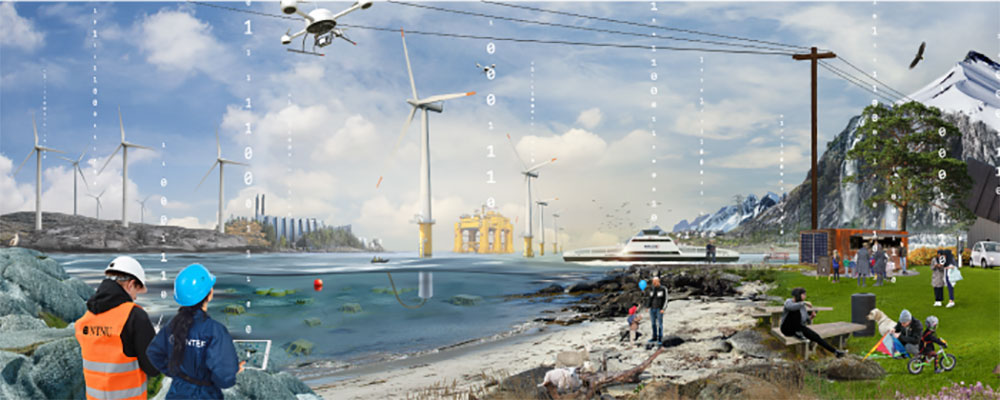





Focus areas
The Renewable Revolution
The Renewable Revolution
Enabling the transition towards 200 EJ of renewables globally by 2050 in a manner that preserves biodiversity and is accepted and well governed by society.
Contact: Christian Klöckner
The Transformation of Energy End Use
The Transformation of Energy End Use
To drastically reduce and transform the energy and power demand in buildings, industry, and transport, through sufficiency in energy services and development and deployment of energy efficient solutions.
Contact: Inger Andresen
Resilient and Integrated Energy Systems
Resilient and Integrated Energy Systems
Developing zero-carbon energy systems that are flexible and adaptable, to facilitate the integration of renewable and low-carbon energy sources while ensuring a high security of supply and resilience against extreme events.
Contact: Irina Oleinikova
Beyond the Fossil Fuel Era
Beyond the Fossil Fuel Era
Understanding and mitigating the social, institutional, economic, and technological challenges to moving beyond the fossil fuel era while advancing a just and legitimate re-orientation of Norwegian fossil fuel industries.
Contact: Tomas Moe Skjølsvold
Sustainable Innovation and Upscaling of Energy Technologies
Sustainable Innovation and Upscaling of Energy Technologies
Innovative solutions for renewable and enabling technologies, and knowledge building on the innovation processes, including scalability and manufacturing perspectives. How to build capacities (people, ideas, knowledge) for the industries that provides the key elements of sustainable energy systems?
Contact: Ann Mari Svensson
Leapfrogging to the Front
Leapfrogging to the Front
Enabling the Energy transition in low- and middle-income countries.
Contact: Ole Gunnar Dahlhaug
Artificial Intelligence for the Digital Transformation
Artificial Intelligence for the Digital Transformation
Enable a large-scale engagement in the energy transition, eventually including all end-users, and largely distributed renewable energy production. Ensure fairness, accountability, safety, scalability and transparency in AI for managing the energy system.
Contact: Sebastien Gros
Hosting
NTNU hosts these Norwegian Centres for Environmentfriendly Energy Research (FMES)