Arctic Ocean 2050

Arctic Ocean 2050

Research for a Sustainable Ocean Management 2026–2036

Introduction

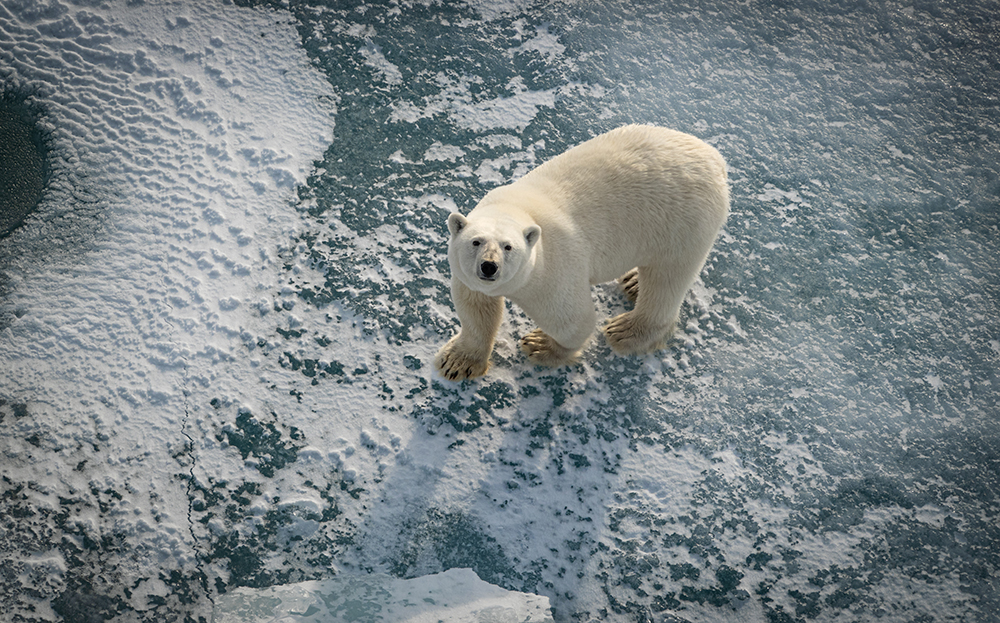
Polar bear on ice

Here you will find NTNU’s research, activities, calls for proposals, and opportunities to participate in Arctic Ocean 2050.

The programme is interdisciplinary and brings together more than 500 researchers from 18 institutions.

UiT The Arctic University of Norway leads Arctic Ocean 2050.

Curious polar bear in the Fram Strait, September 2023. Photo: Trine Lise Sviggum Helgerud / Norwegian Polar Institute.

Are you a researcher at NTNU? Join Arctic Ocean 2050

Are you a researcher at NTNU? Join Arctic Ocean 2050

Arctic Ocean 2050 aims to generate knowledge, tools and principles that support sustainability, conservation and geopolitical resilience in the management of the emerging blue Arctic Ocean.

How to get involved

  • Explore the science plan, implementation plan and communication plan available on UiT’s webiste. Do your research align with the programme?
  • Connect with colleagues who are already involved inArctic Ocean 2050.
  • Discuss potential contributions with your department or faculty.
  • Engage with your national research partners and identify opportunities for collaboration and synergy.
  • Familiarise yourself with upcoming Research Council of Norway funding opportunities related to Arctic Ocean 2050.
  • Contact NTNU's representatives for one or more of the research themes in Arctic Ocean 2050. See the theme descriptions below.
  • Contact NTNU project leaders Knut Vilhelm Høyland and Asgeir Johan Sørensen.

NTNU Ocean and Coast’s Interdisciplinary Research Teams in Arctic Ocean 2050

Research Themes in Arctic Ocean 2050

Research Themes in Arctic Ocean 2050

NTNU contributes to five of the programme's six research themes. The themes are listed below in order of priority, with NTNU's main theme presented first.

RT5: Advances in Observing and Modelling

RT5: Advances in Observing and Modelling

NTNU places particular emphasis on this research theme, centred on innovating for the future.

Goal: To make optimal use of emerging technologies, numerical models, machine learning methods, and data assimilation techniques to fill observational gaps and enhance our ability to predict and understand the interconnected physical, geophysical, biogeochemical, biological, and societal processes in the rapidly changing Arctic Ocean.

Contact at NTNU:

RT2: The Changing Arctic Ocean

RT2: The Changing Arctic Ocean

The research theme is zooming in.

Goal: To understand the atmosphere, sea ice, water column, and seabed within the central Arctic Ocean particularly the le ast - explored slope and deep basin areas.

Contact at NTNU:

RT3: Human Impact and Sustainable Use

RT3: Human Impact and Sustainable Use

The research theme explores prospects and consequences.

Goal: To evaluate the prospects and consequences of future human activity in the Arctic Ocean, to ensure sustainable governance and management of this region at both Norwegian and regional levels.

Contact at NTNU:

RT6: Arctic Ocean Pathways

RT6: Arctic Ocean Pathways

The research theme addresses transdisciplinary connections and actionable knowledge.

Goal: To advance an integrated pan-Arctic understanding of how industrial and sectoral development is mediated by physical, biogeochemical, and biological processes, climate-related risks, changing geopolitics and shifting legal and policy regimes.

Contact at NTNU:

RT4: Abrupt and Extreme Events

RT4: Abrupt and Extreme Events

The research theme focuses on preparing for surprises.

Goal: To assess the nature and potential consequences of disruptive events by improving our skill in their prediction, characterizing their impact, and providing insight into system resilience.

Contact at NTNU:

RT1: The Arctic Ocean in the World (NTNU is not participating)

RT1: The Arctic Ocean in the World (NTNU is not participating)

The research them is zooming out.

Goal: To understand the interplay between external processes and ongoing and potential future changes in the Arctic Ocean.

The World's Most Challenging Ocean

The World’s Most Challenging Ocean

Bjørn Egil AsbjørnslettWe are facing an ocean region undergoing rapid transformation. Understanding what this means requires data collection and analysis in entirely new ways. NTNU contributes its core strengths: technology, autonomous platforms and interdisciplinary expertise, says Bjørn Egil Asbjørnslett, Professor and Director of NTNU Oceans and Coast.

Enabling Technologies

  • Sensors and sensor networks – for continuous monitoring of environmental data in coastal and ocean areas
  • Autonomous vessels and underwater robots – for data collection, inspection and operations in locations that are difficult or dangerous to access
  • Satellite and remote sensing technologies – for monitoring ocean currents, sea ice conditions, temperature and ecosystems on a large scale
  • Artificial intelligence and machine learning – for analysing large volumes of data and improving forecasting capabilities

Research expedition

Research expedition

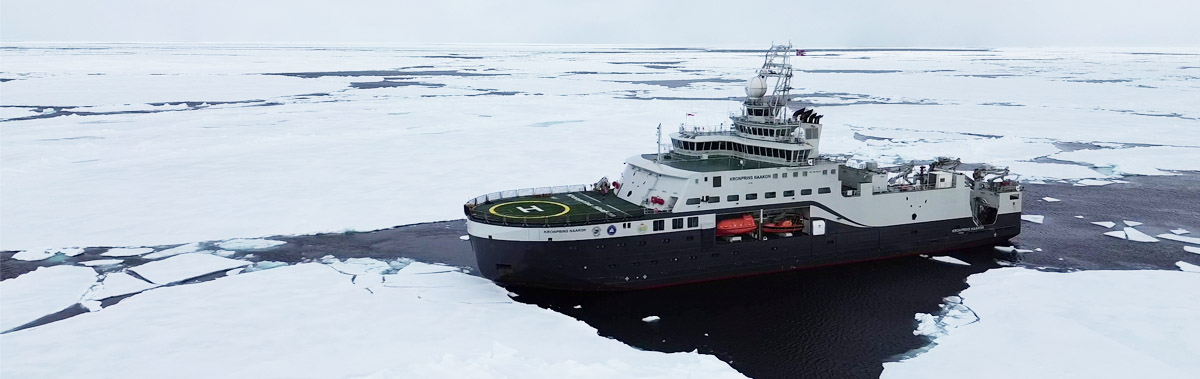
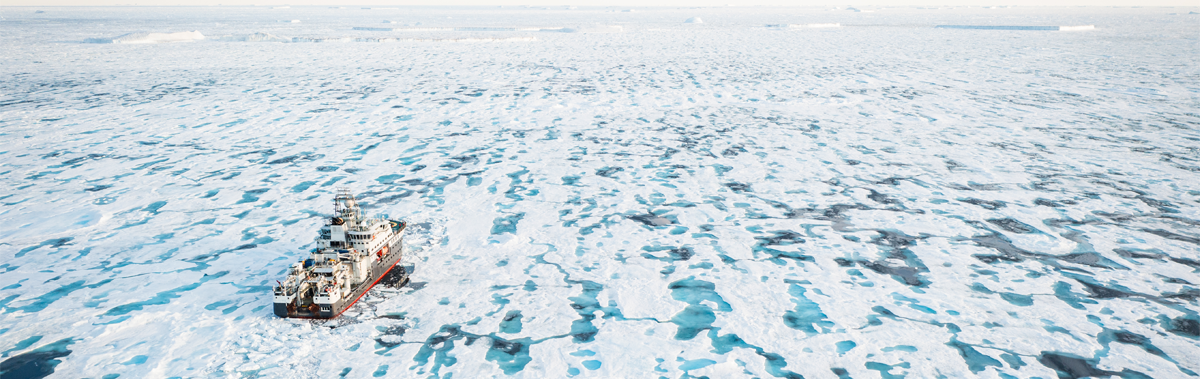
Thirty researchers and crew members took part in a research expedition to the Arctic Ocean from 23 July to 10 September 2026 aboard the R/V Kronprins Haakon, one of the world's most advanced research vessels. The vessel is owned by the Norwegian Polar Institute, which also led the expedition. 

NTNU researchers participating in the expedition: Postdoctoral Fellow Natalie Maria Summers and PhD Candidate Jon Estil Krågebakk.

Arctic Ocean 2050 carousel

  • Gruppe picture of researchers and crew at FF Kronprins Haakon.
    Researchers and crew on board Kronprins Haakon, North Pole, 31 July 2026. Photo: Vegard Stürzinger / Norwegian Polar Institute
  • R/V Kronprins Haakon, North Pole, 31 July 2026
    Kronprins Haakon, North Pole, 31 July 2026. Photo: Vegard Stürzinger / Norwegian Polar Institute
  • Kronprins Haakon i fastisen øst for Grønland september 2023. Foto: Trine Lise Sviggum Helgerud / Norsk Polarinstitutt
    Kronprins Haakon in landfast sea ice east of Greenland, September 2023. Photo: Trine Lise Sviggum Helgerud / Norwegian Polar Institute

Partners in Arctic Ocean 2050