
Programmes of study – Department of geography
Study Geography
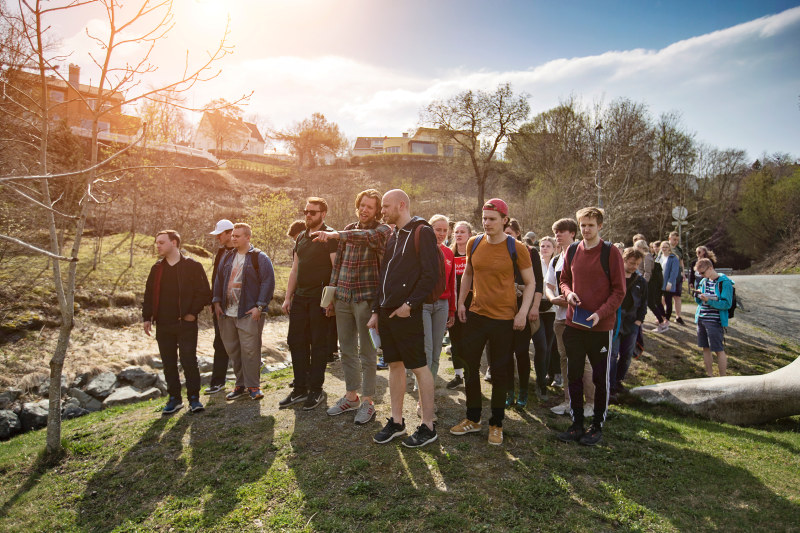
We offer courses in human and physical geography at both bachelor and master’s level. Geography is a wide-ranging discipline combining different scientific methodologies from natural sciences, the humanities and social sciences. This broad approach gives geography students a unique perspective from which to understand complex relationships between human activity and the natural environment.
Central themes in human geography are globalization, landscape change, environmental problems, urbanization, regional development, migration, poverty, and inequality. Approaches to these problems are related to local processes as well as to regional and global scales. Physical geography covers knowledge of landforms, vegetation and climate in different parts of the world, and provides insight on a range of topics, such as how water, ice and wind change the landscape. The consequences of these physical processes for humanity is a central crosscutting theme running through all courses in physical geography. Geography involves both widely used quantitative and qualitative methods, and special geographical methods such as cartography, and geographical information systems (GIS) and remote sensing tools. The discipline has a strong tradition of fieldwork and field courses play an integral role in many of the course units offered by the department.
The Department of Geography offers the following full study programs for international students:
Master Level, 2-year
PhD Education
For Norwegian and other Scandinavian language speaking students we also offer these programmes:
Deputy Head of Education
Contact
Staff
(+ 47) 73 41 29 62
kontakt@ige.ntnu.no
Postal address:
NTNU, Department of Geography
NO-7491 Trondheim
Norway
Visiting address:
Dragvoll, Building 7, Level 4,
Edvard Bulls veg 1, Trondheim